Listen to the audio version of this article. (Generated by A.I.)
Jason Colombini is fascinated with water, so much so that his friends sometimes think he’s a little weird.
“I’ve always been really passionate about water policy,” he says. “I’ve just been fascinated with water rights, waters of different cities, different rivers. My friends will tell you whenever we’re on a trip and we’ll go by a little town, I’ll say, ‘I wonder where this town gets its water supply from?’ They’re like, ‘Who asks something like that?’”
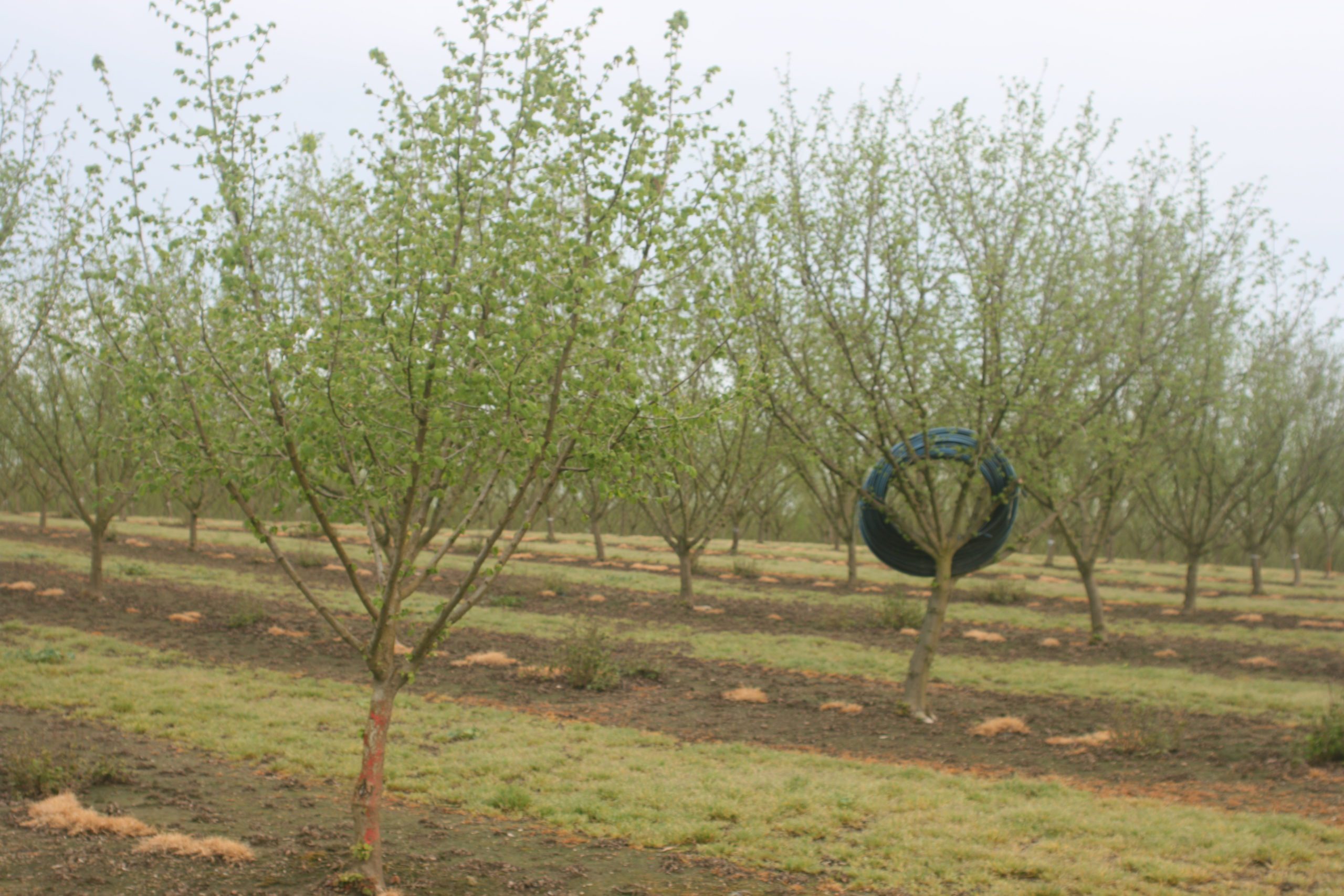
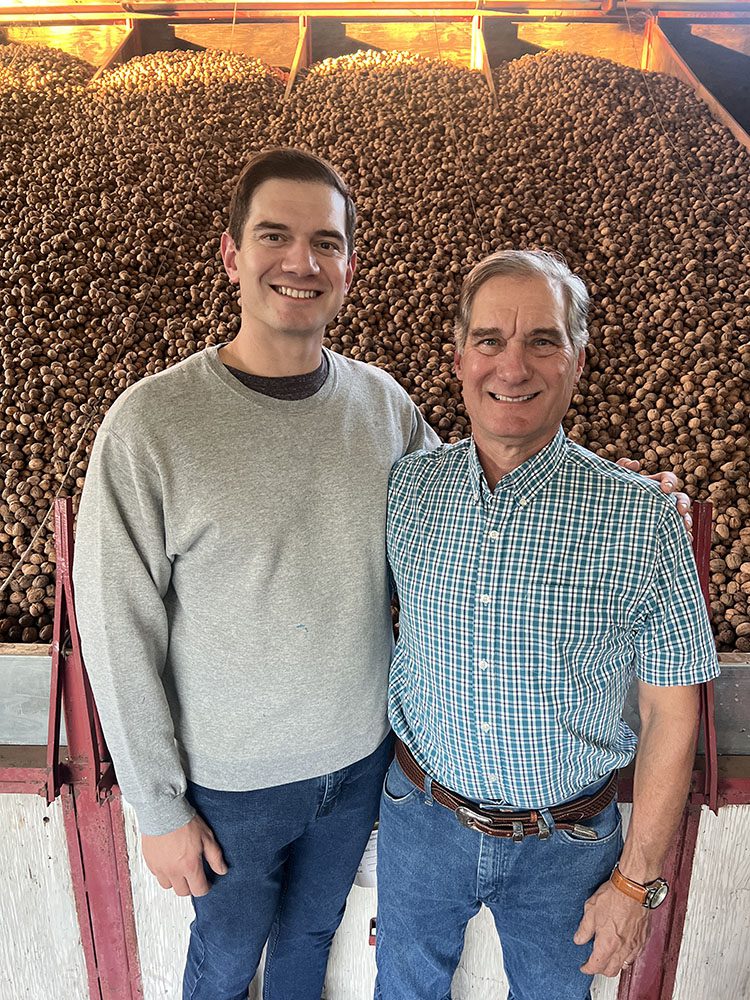
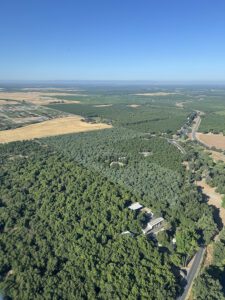
That passion serves him well in his roles in the family’s and his own enterprises: Jay Colombini Ranch Inc., CLC Farms, Latimer Farms and Rancho Colombini. Between the four entities, Colombini manages 265 acres of walnuts and 40 acres of olives, with another 40 on the way.
West Coast Nut asked Colombini to share his unique perspective on the water situation in California along with his thoughts on the current state of the tree nut industry.
Q. How did your family get started in growing tree nuts?
As long as my family on both sides has been in America, they’ve been in farming. On my mom’s side, I’m a fifth-generation farmer, and on my dad’s I’m fourth generation. Funny enough, my great-grandparents on my dad’s side, the Colombini side, and my great-grandparents on my mom’s side had farms next to each other east of Stockton, so my mom and dad grew up near each other.
They’ve had walnuts since the ’20s on my dad’s side, but they grew all kinds of crops. They were row croppers. It was a little bit of everything over the years. In 1990, my dad, his brother and their business partner, Ray Latimer, started CLC Farms, which was the first operation. They purchased 60 acres of walnuts in Linden around July 1990. By March of the next year, Ray purchased the property next door that had his house that he moved to and had a hulling plant on it.
From there, in 2000, my dad bought the next ranch to the west, which is where I moved to when I was 8 and grew up there on the farm. Since then, my dad has purchased more land of his own and grown our operation. I started my own farming operation in 2018 on some leased ground. I also became a partner with my dad and Ray in another walnut parcel we purchased in 2023.
I grew up around agriculture, and I really didn’t know anything else but farming. When I was starting to look at where I wanted to go to college, my dad and grandfather both went to Cal Poly, so it seemed like the place to go. They all studied ag, so I studied ag as well.
I studied ag business at Cal Poly, and I graduated there in 2014. I worked for my college fraternity for a year and traveled around the country to different universities. Then I actually went back to Cal Poly for grad school for two years and graduated in 2017 with a Master of Public Policy, mainly focusing on water policy.
Q. Are you using that policy degree now as you deal with the Sustainable Groundwater Management Act (SGMA)?
In 2018, I was elected to the Linden Unified School District Board and served a four-year term. It was during COVID, which was really difficult. I was actually board president for the year 2020. When I was getting close to reelection, I felt that I needed to focus on something else.
And as fate, Christ or whoever it might be might have it, a couple of hours after my last school board meeting, I received a phone call from the legal counsel for the water district that I’m in, and they let me know that the person who represented my area was moving, and they needed to appoint someone to fill the remainder of his term. If I had been on the school board, I wouldn’t have been able to do both. I’ve heard you’re not allowed to be on a school board where a water district also covers part of its territory.
I wound up going onto the North San Joaquin Water Conservation District Board in January 2023 and then got elected to a full term this past November. That’s really helped me still explore and be a part of water policy, getting updated with water issues that are happening in the state and allowing me to put my knowledge of water to good use.
I’ve been on that board now coming up on three years, and I serve as the vice president of the board. I’m also the board’s representative on the Eastern San Joaquin Groundwater Authority.
Q. Talk a little bit about the water situation and what that looks like going forward.
It’s very tricky, and particularly the more that you go south. I think one thing I’ve heard is everyone agreed that there had to be something done about groundwater overdraft, but the question is what do you do?
At some point, it comes to a realization it’s not going to be something perfect, and it’s just tough to see what’s happening in the process of creating that sustainability in the state. You get up here into San Joaquin County or the Eastern San Joaquin groundwater subbasin, and the advantage we have compared to the basins further south is we have a lot more surface water we can potentially use up here to supplement our groundwater usage, so we can do more projects to either use in-lieu of recharge or direct recharge because we have surface water available.
For us personally, on the ranch here, we are really blessed because all our walnuts are along the Calaveras River, and we have senior water rights on the river. We are 99% surface-water irrigated. Once in a blue moon, we’ll use the wells to protect against frost if there isn’t enough water in the river in early spring.
Q. How have you seen farming practices change over the years?
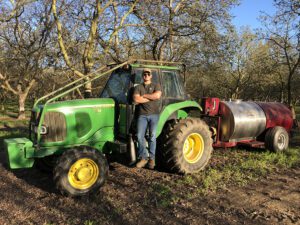
I wasn’t really active on the ranch until I moved home, which was in July 2017. But even in the last eight years, I’ve seen a lot. I think that being willing to invest in new technologies is a big thing that’s taking hold better, particularly with people who are younger. Cover cropping, which I thought was a lot more common because we’ve done it for a while, is becoming a lot more popular with walnut farmers.
Just farming in general, looking at things like soil health and biological preventative sprays for some of the new diseases that are appearing within the walnut industry. There are practices like no-till, so not disking our orchards every year. A couple others are doing summer prunings for dead wood or spreading out your fertilizer applications with less fertilizer but more applications, like a spoon-feeding method.
The way the industry is progressing now is we’ve got to have new ideas and not always do things the same way that we’ve always been doing. There is a balance, though, and sometimes you also have to trust what the “old-timers” are saying, too.
“The way the industry is progressing now is we’ve got to have new ideas and not always do things the same way that we’ve always been doing.” – Jason Colombini, grower
Q. What are the three things that keep you up at night about growing tree nuts?
I almost want to say 1, 2 and 3 is price. When I was in middle school and high school, walnuts were getting $2 a pound. That was the big boom, and so it just seemed like such a promising time.
Since I’ve been back, the first couple years were good, but then we had COVID, and the shipping issues, retaliatory tariffs and oversupply issues made it seem like one thing after the other. It’s a concern of: Is there a future for walnuts?
I still think there is, but you just have to make it through the bad times to get back to the good times. It can be discouraging starting out right now, being young and farming right now, and putting all this extra work, yet thinking, “Could I have done better if I’d gone into a different industry and not had to work as hard and still made more?”
I think there’s many nonmonetary benefits in ag, and the lifestyle of being in ag, and the freedoms that it gives you that are hard to measure, as well. Ultimately, of course, it does need to be profitable.
We’ve depended a lot on the different grant programs the last few years. Those have become immensely popular, and I think that’s where I’ve really been able to shine, too, by using my experience from my Master of Public Policy degree about grant writing.
It’s a piece of how you stay profitable now, and obviously, everyone wishes you’d just get a really good price for your walnuts and you didn’t have to deal with all that other stuff, but I don’t know if or when that’s going to come back to that point.
I would say No. 2 would be climate change, how that might affect the area we grow walnuts in or the quality of walnuts in the future.
Related to that, too, is the water supply. How are we going to be able to adapt when you have less of a snowpack each year, and so you’re not storing as much water, or it gets warmer earlier, so it melts more of that snow, and not as much is in storage, or there’s a SGMA world where we’re using that surface water to help replenish groundwater, but there’s not enough of that, so it cuts back on the groundwater.
No. 3 would be something happens where there’s a pest or disease that doesn’t exist yet that becomes an issue in walnuts.
Q. Talk a little bit about what you’re doing in terms of sustainability.
I think we’ve been very progressive with sustainability on our ranch, and that’s been a huge priority for me. A few things on our ranch, particularly related to these grants that are available, are Healthy Soils Program grants, going from traditional till to no-till, planting cover crops and doing less solid spraying before harvest.
Other practices we’ve done is putting up owl boxes and turning in older, more polluting tractors for newer tractors that are Tier 4. We’ve done several of those and have a lot more that we’re trying to change over.
Q. What kind of advice would you have for somebody who wanted to get into farming tree nuts?
If they didn’t have any family in it, I think my advice would be to go to the Farm Service Agency and the NRCS at USDA and get help and advice with the proper funding because there’s definitely federal funding and government funding available to help get people in the door, but I think a lot of people don’t realize that it exists.
I think that’s incredibly crucial because if you’re coming in, sometimes I feel like ag can have not a locked gate but just a high fence that you’re seeing and looking for that gate to enter because it’s a lot to get over. If you’re coming out of college, who wants to go into that much debt to purchase a farm or equipment or supplies you need? That’s why these support programs from USDA are so important.
Q. Is there anything else that you think is important to talk about?
Another big thing just to remember in ag in general is to treat the people that you work with and work for you right. I would never have any of our employees do something I wouldn’t be willing to do myself.
We need to make sure that we don’t forget that there are a lot more than just the owner-operators or managers. There’s a lot of people out in the fields that we depend on, that depend on us, that we need to give respect to and make sure we’re treating fairly.
I would say, too, some people will say this next thing sounds crazy. I love being in California. I think California is the best state in the country. I know a lot of people complain about it, and yes, we do have a lot more rules and regulations here than other places.
I think that sometimes a lot of those, not all, but a lot of them have good reasoning behind them and have made us safer. Some of these things that I know we all like to complain about and say this is just unfair regulation have a good reason to them.
I wouldn’t trade being in California for any other place, any day. I love this state. I love everything about it.