

Listen to the audio version of this article. (Generated by A.I.)
Grain and forage crops are being promoted as viable alternatives to permanent plantings as groundwater access declines in many California agriculture production areas.
At a grower workshop at the Kern County UCCE office, growers seeking alternatives to permanent crops due to current or anticipated restrictions on groundwater pumping came to learn about possible crop choices and management under the Sustainable Groundwater Management Act (SGMA).
Speakers from UC ANR, the California Public Policy Institute and Sustainable Conservation stressed that keeping land productive or at least covered for dust mitigation was important given the number of acres estimated to be fallowed due to SGMA.
Keeping lands productive will require innovation and investment. New land uses must deliver ongoing control of dust, weeds and pest species. Ideally, new uses would support local economic activity and other local benefits. Investments will be needed in infrastructure, workforce training and innovative practices.
Management Decisions
Management strategies for planting sorghum crops in areas with low water availability were discussed by Jackie Atim, UC ANR assistant specialist.
Drought-resistant sorghum crops can be a substitute on water-limited land, Atim said. Different varieties of this crop can be used for forage, feed, food or biofuel. Forage sorghum cultivars often exhibit greater drought tolerance than many other forages. One key advantage of forage sorghums is that they have better capacity to come back or recover from periods of water stress that may occur at different growth stages and still deliver decent yields.
Atim said this drought tolerance gives growers some flexibility if available water is limited or is needed for other crops.
Plant populations to achieve good yields are variety specific, she said, because seeds need adequate soil moisture for germination and establishment of root systems. Where residual soil nitrate levels are moderate, vigorous sorghum cultivars can scavenge deeper soil nitrogen with deep root systems.
Atim stressed that yields will not be equal to fully irrigated forage. Sorghum types available range from short-season to long-season photoperiod sensitive. The total range of ETc is 19 to 24 inches.
“Drought-resistant sorghum crops can be a substitute on water-limited land.” – Jackie Atim, UC ANR
Maximizing Water Productivity
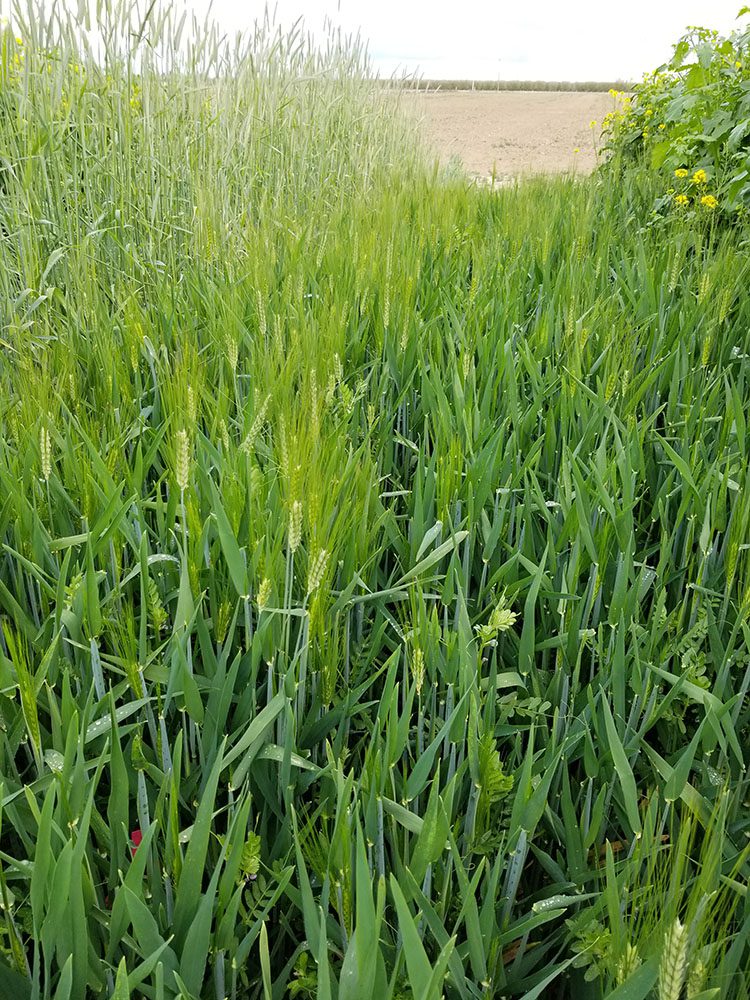
Winter cereal forage and grain crops are another route to maximizing water productivity. Mark Lundy, associate CE specialist, said water regulations and increasing drought threaten agricultural production in the Central Valley. There will be negative economic, agronomic and environmental impacts due to fallowed fields, he said.
Winter cereal crops offer flexibility as they can be harvested for forage or grain or be terminated as a cover crop to mitigate dust. Lundy said that targeted early season irrigation greatly expands the feasibility of winter forage production in the San Joaquin Valley. A field study showed 58% of acreage with limited surface water can reliably achieve break-even yield levels with targeted irrigation totaling 8 inches, he noted. If no irrigation water is applied, planting later than the normal time increases the probability of crop establishment success. Regardless of the amount of irrigation water applied, forages harvested at soft dough stage, he said, have the highest water productivity and the highest returns to total water consumption at average prices.
Under deficit irrigation, grain yields do not maximize water productivity or returns.
Another study conducted at the UC Westside Station added that a rainfed winter cereal crop is unlikely to be economically viable in much of the San Joaquin Valley.
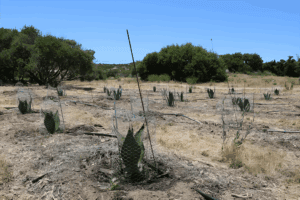
Agave is another alternative to fallowing ground, Srabani Das, UC ANR assistant cooperative specialist, said. This drought-resistant succulent plant has multiple uses and is emerging as a bioenergy feedstock with high sugar content and low lignin levels. Agave has high water use efficiency, can grow in degraded soils and has potential for soil carbon sequestration. There are currently two types of agave growers in California, Das said. Larger acreages are developing it as a commodity crop while small-acreage growers prefer craft distillation.
Saving Pumping Costs
Transitioning from marginal almond and pistachio acreage to agave in the San Joaquin Valley can reduce applied irrigation by 90% to 95%. The direct reduction in surface water costs or pumping can translate to approximately $600 to $1,400 per acre per year in avoided costs, Das said. She noted there were no agave field or on-farm trials available in California.
Caitlin Peterson, associate director at the Public Policy Institute of California, said the San Joaquin Valley is ground zero for implementing SGMA, enacted in 2014 in response to undesirable results from groundwater extraction. The valley has the largest imbalance among state basins at 2 million acre-feet of overdraft. Attaining balance, Peterson said, means more supply, less water use or both.
“It is an economics problem: Some solutions are more costly than others.” Multiple strategies for keeping fallowed farmland covered to mitigate dust include recharge basins and native habitat.
While the San Joaquin Valley has a big overdraft, it also has a lot of recharge potential. Peterson said more groundwater sustainability agencies are recharging water, with 5.3 million acre-feet stored on site and 7.6 million acre-feet estimated valleywide.
In Kern County, water recharge potential is good and efforts there to place more available water underground are encouraging; however, lack of conveyance infrastructure is limiting recharge opportunities, Peterson said. Water trading could significantly lower the costs of water supply reduction. It would shift where water is used to reduce costs of fallowing. New water supplies from the Sites Reservoir and Delta Conveyance, Peterson added, could further soften the blow of land fallowing.
Supplemental irrigation might be a better bet for the valley, she added. Grain or winter forage crops could be grown with 4 to 8 inches of water made possible by water trading or credits for recharge. Four sites where alternative winter management systems can work include: Westlands with low-input forage on dewatered land, small livestock grazing, hay; Tule Basin, with cover cropping integrated into fallowing program; Turlock, where a flex crop replacement for mature orchard could include forage, hay, grazing or recharge; and Merced, with water-limited wheat as transition to fallowing, extending the useful life of a drip irrigation system.
Megan Powers with the California Department of Conservation noted new funding opportunities with the Multibenefit Land Repurposing Program (MLRP). Priorities with the program are agricultural land solely dependent on groundwater, proximity to disadvantaged communities and having soil quality issues.
She noted that one of the first MLRP projects funded, a Tulare County site that removed 31 acres of citrus, was replaced with a groundwater storage basin with native habitat restoration. The $2 million project was funded by MLRP and the Kaweah Groundwater Sustainability Agency.
In 2026, Powers said, $32 million is available from MLRP groundwater-saving projects.

Cecilia Parsons | Associate Editor
Cecilia Parsons has lived in the Central Valley community of Ducor since 1976, covering agriculture for numerous agricultural publications over the years. She has found and nurtured many wonderful and helpful contacts in the ag community, including the UCCE advisors, allowing for news coverage that focuses on the basics of food production.
She is always on the search for new ag topics that can help growers and processors in the San Joaquin Valley improve their bottom line.
In her free time, Cecilia rides her horse, Holly in ranch versatility shows and raises registered Shetland sheep which she exhibits at county and state fairs during the summer.