

Listen to the audio version of this article. (Generated by A.I.)
In 2023, the California walnut industry developed a strategic plan designed to drive grower prosperity, and defining the industry’s sustainability story was one of six priorities to help the industry succeed over the long haul.
Since then, the California walnut industry established a Sustainability Working Group (SWG) to define and elevate its sustainability story as a key point of differentiation. The group was tasked with assessing customer expectations, future regulatory requirements and the industry’s current practices to shape a clear sustainability framework. In 2024, this resulted in a Sustainability Index focused on four areas: healthy soils, water management, sustainable pest management and greenhouse gas emissions.
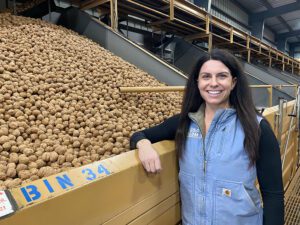
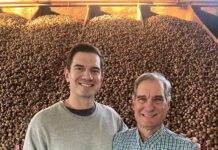
Robert Verloop, executive director and CEO of the California Walnut Board and Commission, and grower members of the SWG, Jocelyn Anderson and Davin Norene, shared their views on the progress made by the industry in the past year.
“We’re diving deep in the grower side,” said Verloop, who also talked about how research is supporting sustainability efforts and industry success. The industry is prioritizing research that delivers practical solutions to improve quality, efficiency and profitability. Examples are research-based solutions on efficient water use, pest and disease control, and soil health. The industry is also streamlining the research structure to ensure that resources are focused on high-impact, timely results for growers and handlers.
Anderson, from Willows in Glenn County, is a fourth-generation walnut grower. She said the group is focused on grower buy-in and spreading awareness of opportunities to adopt sustainable production practices.
“We want to make sustainability easily accessible to walnut growers,” Anderson said. Continued outreach and education are needed to increase grower participation. The SWG also agreed that many walnut growers statewide are already implementing sustainable farming practices in their orchards.
Growing Practices
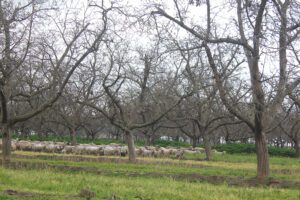
Emphasizing grant programs offered by resource conservation districts and CDFA’s SWEEP program, Anderson said there are opportunities for growers to invest in sustainability. The Healthy Soils grants support cover crops to improve soil health. SWEEP grants can cover solar installations, VFDs on irrigation pumps for water regulation and AgTech installations. She noted that integrated pest management and mating disruption are key pest management tools growers can use in sustainability efforts.
Verloop said the industry is taking a “cultivate with care” approach. The grower-led SWG is working to benchmark environmental, social and economic practices. In the long term, collaboration with UC researchers is aimed at reducing use of restricted pesticides and finding alternative strategies to protect walnut orchards from pest damage and disease. Verloop noted a critical tool in blight management, the fungicide mancozeb, is under review by the EPA and the EU. California Walnut Board is working with the registrant to see if protocols can be adjusted to meet requirements for exports.
Breeding strategies are also aimed at delivering additional marketing opportunities by spreading out the harvest season. Earlier maturing walnut varieties along with drought tolerance and improved fruit set in low-chill years are being sought.
Verloop said use of technology to improve water and nutrient use efficiency is another example of sustainability efforts by growers.

Norene, a walnut grower at Big Time Farming in Rio Oso, said a definitive industry plan differentiates California walnuts from other origins as well as the crop systems. Grower meetings are being held, he said, to help with implementation of orchard management recommendations and to work on a way to measure success of sustainability efforts.
“It is vital to walnut marketing that buyers and consumers know how growers produce a quality walnut crop,” said Norene. “Many walnut growers already believe their orchards are an important part of the ecosystem, as they are proven to be a carbon sink, fortify beneficial insects in planted cover crops and provide habitat.”
Norene confirmed that many walnut growers have already implemented orchard management practices that save water and nutrient use. Planting cover crops to build soil health and help with water infiltration is a practice many walnut growers use. In addition, taking soil samples and planting cover crops to mitigate soil problems is a practice Norene said he uses when developing a new orchard. He noted, though, that evaluation of soil improvement is important to growers for economic reasons.
Verloop said buyers and consumers will be brought up to date on sustainable practices adopted by walnut growers and handlers. He highlighted that long-lived walnut trees are notable for being carbon sinks. Verloop said orchard removals, where whole orchard recycling is done, contribute positively to carbon sequestration.
Utilizing hulls and shells, or “upcycling,” is also on the research list. Verloop said that hulls traditionally are composted and returned to the soil to add organic matter. Shells pose interesting opportunities, he added, including nutritional supplements or processing into biochar to be used as a soil amendment. “We want to find ways to use 100% of the crop,” Verloop said.
Part of a Larger Plan
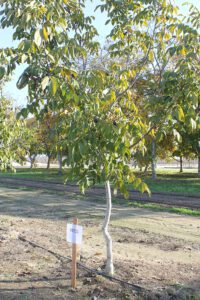
The industry’s sustainability efforts support the strategic plan developed by the industry in 2023. The plan focused on six basic goals: delivering the best quality product, activating sales around the globe, fostering innovation, supporting goal-oriented production and post-harvest research, building industry cohesion and defining the industry’s sustainability story.
At the center of the strategic plan is an industrywide focus on quality. There is now a better understanding of what is needed to preserve walnut “taste life,” Verloop said. Preserving kernels’ fresh taste during shipping will keep consumers coming back for more. Verloop said efforts are being made to keep walnut kernels cool during processing, packaging and transport. Refrigerated trucks or shipping containers are being strongly recommended for product shipped during warmer months to preserve kernel quality. He noted that many times, shipping is under the control of the buyer.
“We try to educate them on the importance of refrigeration,” Verloop said. Internationally, more containers are refrigerated, preserving walnut shelf life.
On the marketing side, in the U.S., the California Walnut Board and Commission are building relationships with social media influencers who are followed by the Gen Z and millennial generations. Part of the marketing campaign is to partner with dozens of cooking, wellness, lifestyle and hosting influencers who reach millions of potential consumers.
“This isn’t just a new marketing campaign. It is a complete repositioning of California walnuts for a new generation of consumers who prioritize nutrition and versatility in their food choices,” said Christine Lott, director of integrated communications for the board and commission.
To support market expansion internationally, the commission will be implementing USDA’s Regional Agricultural Promotion Program to drive new market development. This includes efforts in Taiwan, Singapore, Malaysia, Morocco and other emerging nations. Other key efforts will be conducting market initiatives supported by the USDA Market Access Program funding in key international markets including Asia, Europe and the Middle East.

Cecilia Parsons | Associate Editor
Cecilia Parsons has lived in the Central Valley community of Ducor since 1976, covering agriculture for numerous agricultural publications over the years. She has found and nurtured many wonderful and helpful contacts in the ag community, including the UCCE advisors, allowing for news coverage that focuses on the basics of food production.
She is always on the search for new ag topics that can help growers and processors in the San Joaquin Valley improve their bottom line.
In her free time, Cecilia rides her horse, Holly in ranch versatility shows and raises registered Shetland sheep which she exhibits at county and state fairs during the summer.