



Listen to the audio version of this article. (Generated by A.I.)
More tree nut growers are looking at sap analysis as a diagnostic tool to measure the real-time status of nutrients.
Sean Jacobs with Rovensa Next (formerly Agro-K Corporation), a plant nutrition and biosolutions company, said sap analysis can help growers and crop advisers see trends in plant nutrition status and understand how the arrangement of nutrients identified and their levels affect plant performance and crop quality.
The ideal concentration of nutrients in the sap doesn’t change over the growing season, Jacobs explained. But the rate of use and uptake by the plant does. With the sap analysis data, a grower or crop consultant can assess the nutrition program to determine if it is meeting plant demands and make changes before visual signs of deficiency or toxicity occur.
“Growers and [crop advisers] are seeing the value in sap analysis, and interest continues to grow as they learn more about it and understand the benefits,” Jacobs said.
The cost of applying a nutrient that isn’t needed or can negatively impact uptake of other nutrients can potentially be saved with timely information on crop nutrient status. Sap testing helps fine-tune when to apply needed nutrients for maximum uptake efficiency, reducing waste and cost.
How Sap Analysis Reveals Plant Health
Laboratories that provide sap analysis use proprietary extraction methods to obtain sap samples. Sap analysis evaluates the nutrient concentrations of both macro and micronutrients from sap in the xylem and phloem, along with other biological indicators. Sap analysis can also detect ratios and imbalances between nutrients. This is important, Jacobs said, because overapplication of certain nutrients can block the uptake or activity of other important nutrients. Understanding the trends in nutrient concentration can also help identify deficiencies in nutrition before visible symptoms appear.
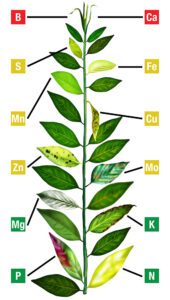
Deficiency or toxicity symptoms can be caused by imbalances or interactions among nutrients rather than the true lack of a nutrient. An example is a crop exhibiting a calcium deficiency. This positively charged nutrient may be blocked by too much phosphorus, potassium, sodium, magnesium or ammonium. Analyzing sap can identify imbalances, and rather than adding more calcium, reducing applications of a different nutrient can correct the imbalance and increase the availability and activity of calcium, saving material and application costs.
“It gives you a plan, do you need to do something or not?” Jacobs said.
At the 2025 Crop Consultant Conference, fertilizer session panelist J.W. Lemons with Verdesian Ag Services said sap analysis is an alternative tool that can complement other management practices.
Lemons said sap analysis shows the flow, where the material is moving in the plant from point A to point B.
“What I think sap analysis can bring to light is nutrients like calcium are actually not parking in the leaf, they’re being assimilated and moved and turned into the building blocks we need them turned into. That’s a way to kind of monitor the path, like putting GPS on it.”
Sap analysis, Lemons said, is a great tool to add to what you are already doing with nutrient monitoring. “Don’t change your routine, add it to it,” he advised.
With this monitoring tool, low nitrogen or potassium levels in the plant can be detected early enough to adjust nutrient applications before tree health or crop yields are affected.
Getting the Most from Your Sap
Jacobs said that sap analysis is done with sets of new and old leaves. The extraction process is done without rinsing, drying, grinding, cutting or crushing the leaves. Laboratories that process the samples extract the sap, which is largely free from any leaf parts or leaf surface contaminants. Sap analysis is more like a blood test, he said, compared to traditional leaf tissue sampling, which is more like a biopsy approach. The sap is analyzed for 19 nutrients and five other nutrient and metabolic indicators. The sap analysis from the new leaves is compared to that of the older leaves, allowing for comparison of nutrient uptake, mobility and remobilization within the plant.
How and when the leaves are pulled from the tree is critical. Leaf samples for sap extraction can be pulled anytime during the growing season as long as the leaves are fully expanded, not newly formed or in senescence.
Jacobs said it is important to get viable leaf samples to the laboratory. Optimum time to pull leaf samples is in the morning. Samples should be quickly cooled.
“You’re dealing with living tissue, so to preserve the status, cool them, place them in the dark,” he said. This will stop photosynthesis and greatly slow metabolic processes. Shipping the leaves to the laboratory should be done in a way to preserve their viability.
“It’s like medical lab results for plants. You can look at the results and see that they are high or low here or there and can adjust what you’re doing, but that is essentially treating the symptoms.”
– Sean Jacobs, Rovensa Next
Jacobs said it would not be unreasonable to submit leaf samples twice a year, as it can provide an opportunity to change or correct, and forecast, nutrient demand.
Analyzing the data received from the lab can be a challenge for a grower.
“It’s like medical lab results for plants,” he added. “You can look at the results and see that they are high or low here or there and can adjust what you’re doing, but that is essentially treating the symptoms.”
To get the largest benefit from sap analysis, understanding what the levels and relationships are telling you and how to manipulate them requires knowledge of the workings and interactions of these nutrients in plant systems, he said. But don’t be intimidated, experts like Jacobs are here to help.
The power of sap analysis, Jacobs continued, is its ability to largely cut out the noise of the structural components to reveal the workings of the plant systems.
“Traditional tissue analysis is kind of like trying to read a book on a billboard while traveling by at 80 miles per hour. You miss more than you pick up and the story is lost in the words. Sap analysis gives you the story, the pertinent information about the nutrient status of the plant. It’s like the Cliff Notes version of the story.”

Cecilia Parsons | Associate Editor
Cecilia Parsons has lived in the Central Valley community of Ducor since 1976, covering agriculture for numerous agricultural publications over the years. She has found and nurtured many wonderful and helpful contacts in the ag community, including the UCCE advisors, allowing for news coverage that focuses on the basics of food production.
She is always on the search for new ag topics that can help growers and processors in the San Joaquin Valley improve their bottom line.
In her free time, Cecilia rides her horse, Holly in ranch versatility shows and raises registered Shetland sheep which she exhibits at county and state fairs during the summer.