

Listen to the audio version of this article. (Generated by A.I.)
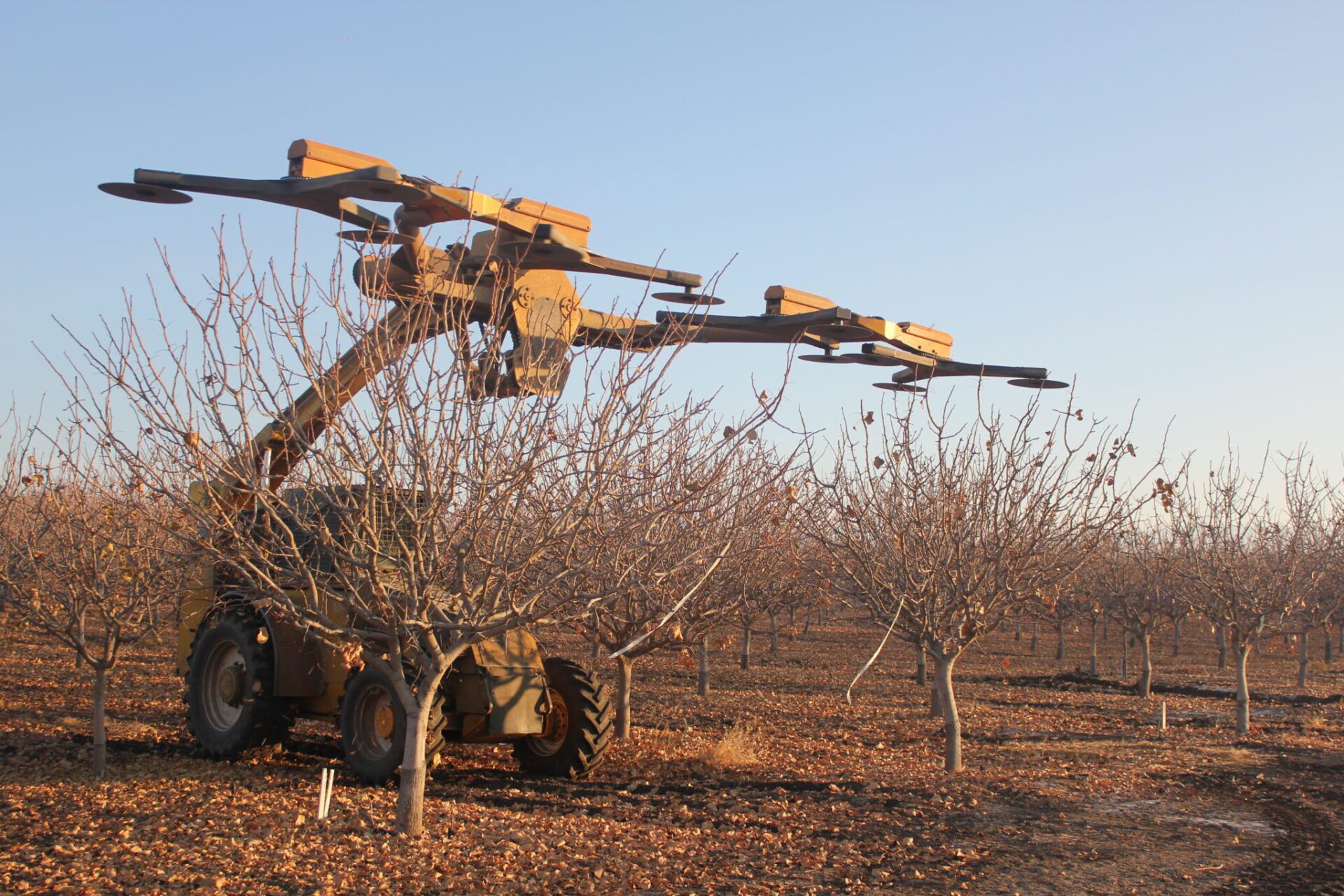
Achieving harvestable yields is the goal when pistachio growers send hand pruning crews and mechanical pruning equipment into their orchards during the dormant season.
The piles of cut branches and trail of wood chips down the row means the trees are being shaped for efficient removal of nuts, so harvest equipment isn’t obstructed by large branches and for light penetration. Controlling and training new growth also helps nuts end up in the bin at harvest, not on the ground.
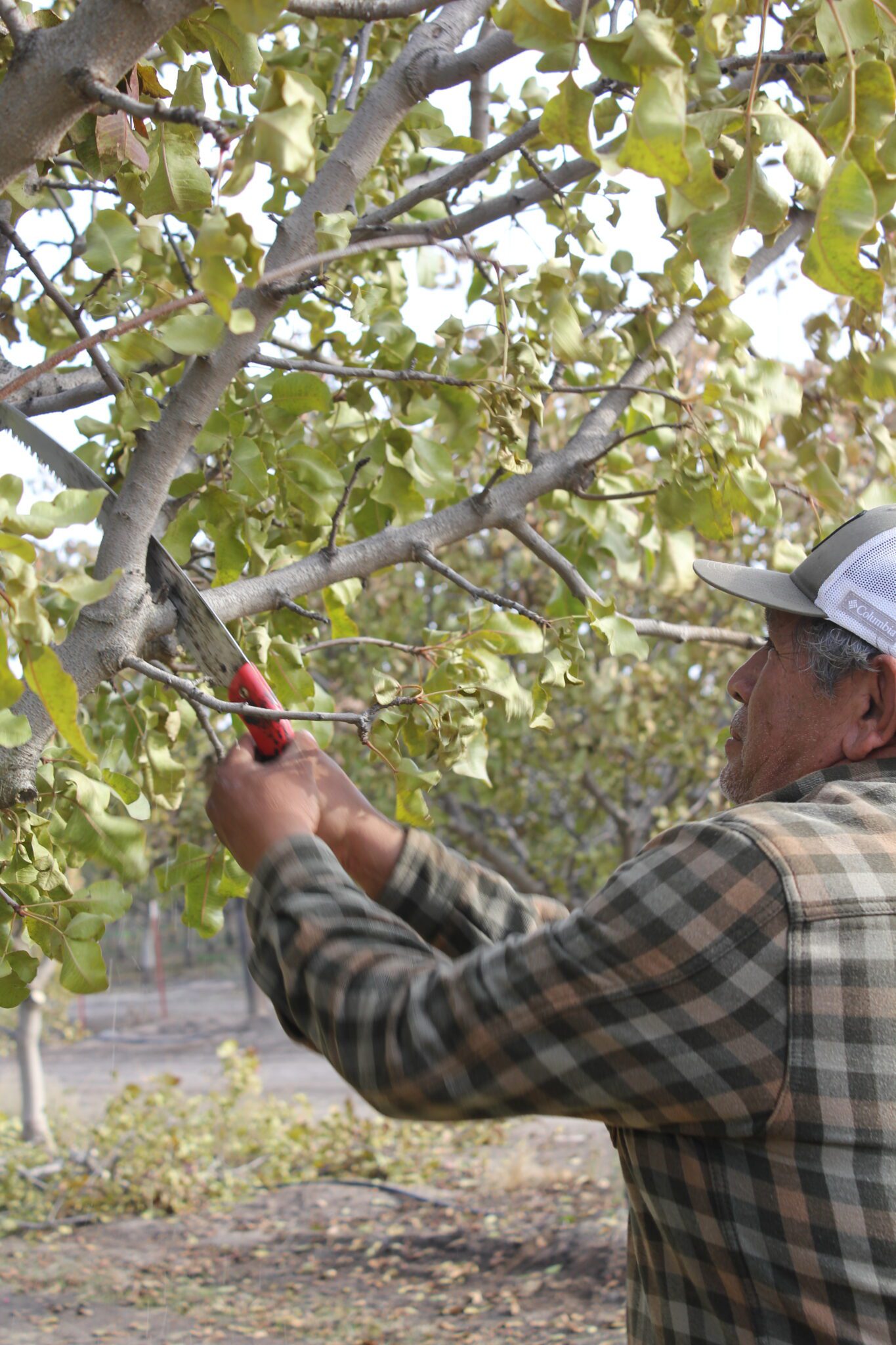
Zack Raven, grower service manager at Keenan Farms in Kettleman City, said the combination of hand and mechanical pruning works well, as it achieves the desired tree shape while cutting some of the hand labor costs. The hand pruning allows for more precision where needed while the lower cost mechanical pruning is indiscriminate but can speed up the process. Raven said the routine at Keenan is to machine hedge every other row every other year and to top canopies every 2-3 years. Hand pruning is done every year on both sides of the row, but crews can move through an orchard faster when one side of the trees has already been cut back. The job of the hand crews is to add precision.
Louise Ferguson, UC Department of Plan Sciences and a long-time pistachio production researcher, said the precision of hand pruning in shaping and opening up a tree makes it valuable.
Hand pruning is a skill. Pruners must know the difference between a fruiting bud and a vegetative bud and understand the apically dominant growth habit of the pistachio tree. They must also know the crop is borne on one year old wood and recognize the desired shape of the canopy. They must also recognize heading cuts and thinning cuts. A heading cut removes stored carbohydrates, encouraging vegetative bud break of the remaining buds and producing branching and new fruit bearing growth. Thinning cuts remove the entire shoot at the base. There is less of a response by the tree and the canopy is opened to allow more light on the lower branches. Thinning cuts also enhance shoot growth, forcing the canopy upward. Tipping cuts are used to reduce length of shoots (at the top of the canopy and induce lateral branch development.
Early shaping goal
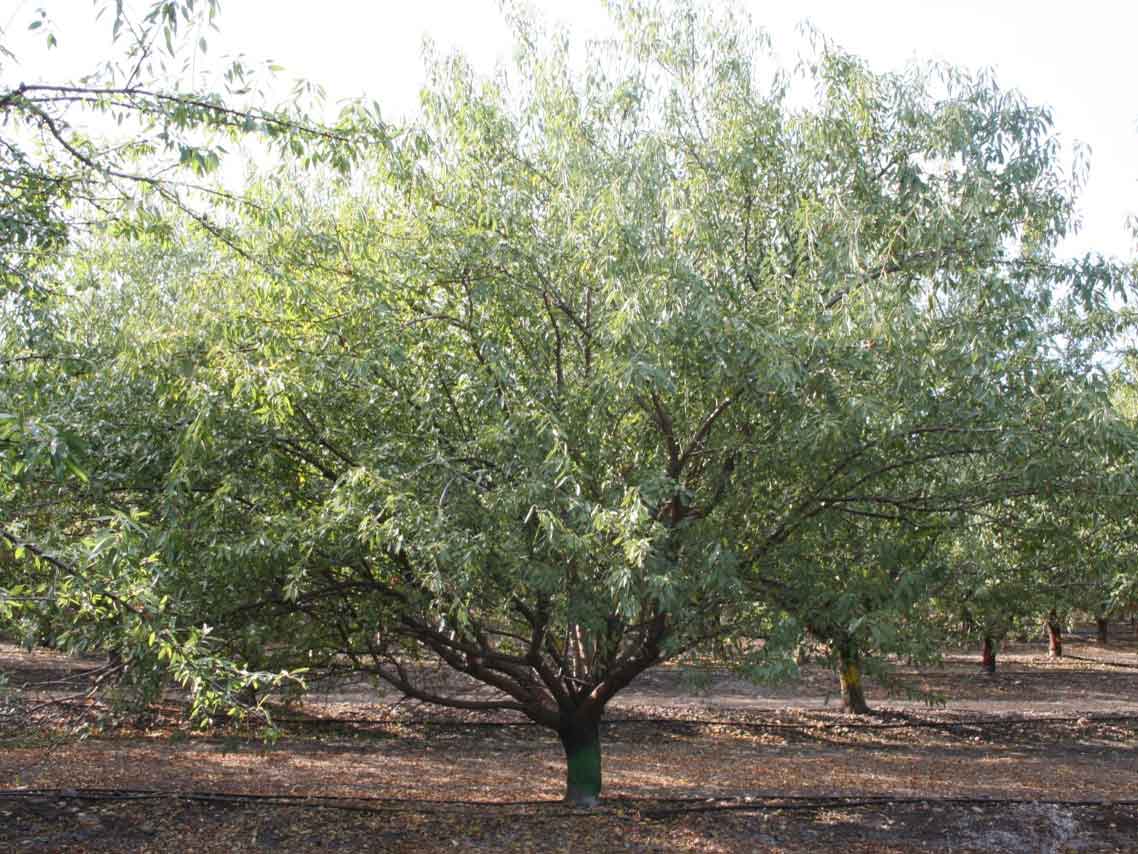
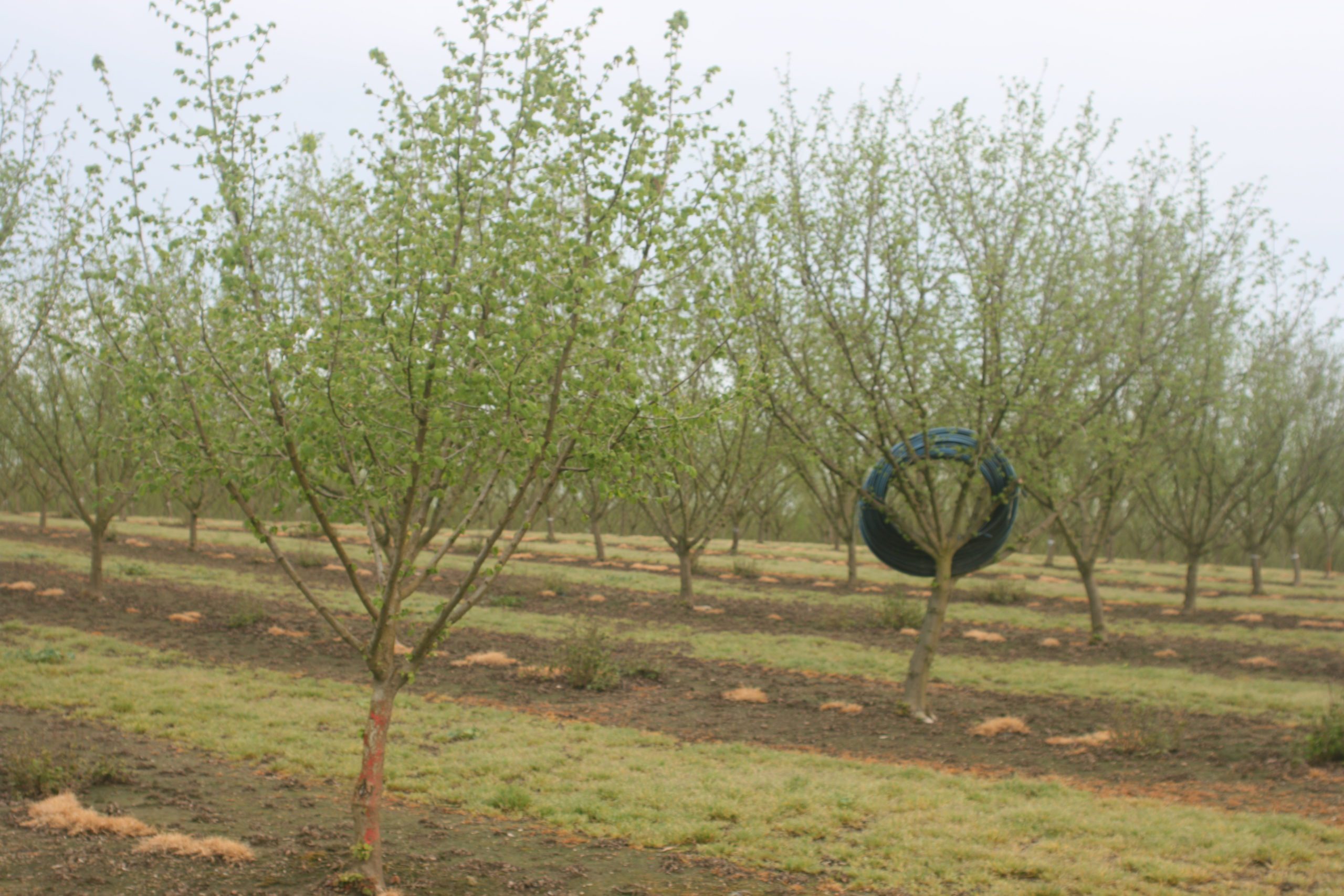
In their first five years, the goal is to shape a tree canopy with heading and training cuts that is able to intercept maximum light. As the tree matures, canopy management is done to assist photosynthesis and to keep the tree rows accessible to harvest equipment without contacting large branches. In older trees, Raven said, pruning continues to push back branches to keep tree shape. Topping is important to keep the tree at 14-15 feet maximum height. Trees over that size will fling nuts wide of the catch frame and production will be lost.
With the focus on training canopy growth, hand pruners use thinning cuts to remove low, overlapping branches that won’t shake. Thinning cuts on the outside of the tree push the canopy up and closer to the tree trunk by removing thinning branches that grow outward. Hand pruners also look for long branches that extend to the tops of the trees, blocking light. Whips at the top of the are tipped with heading cuts.
“All these cuts improve the harvestability of the trees,” Raven said. Nuts growing on long horizontal branches won’t come off no matter how long the shaker shakes.
“That is one of the main reasons why some hand pruning is necessary,” Raven said. A more compact tree with branches relatively closer to the trunk will send more energy to the branches, releasing nut clusters.
Ferguson notes that the ideal harvestable canopy is compact and upright and the trunk is accessible to the shaker head. Shaking will not increase the harvester efficiency, but pruning to direct branch growth upward, having the crop closer to the tree axis and removing flat branches will.
Timing of pruning mature trees is important. The dormant pruning should be done before the lateral bud break suppressing plant hormone auxin is produced in the apical bud. Removing apical bud stops the auxin distribution that inhibits lateral vegetative bud break. This means pruning should be done before the apical bud begins to break dormancy.

Cecilia Parsons
Cecilia Parsons has lived in the Central Valley community of Ducor since 1976, covering agriculture for numerous agricultural publications over the years. She has found and nurtured many wonderful and helpful contacts in the ag community, including the UCCE advisors, allowing for news coverage that focuses on the basics of food production.
She is always on the search for new ag topics that can help growers and processors in the San Joaquin Valley improve their bottom line.
In her free time, Cecilia rides her horse, Holly in ranch versatility shows and raises registered Shetland sheep which she exhibits at county and state fairs during the summer.