


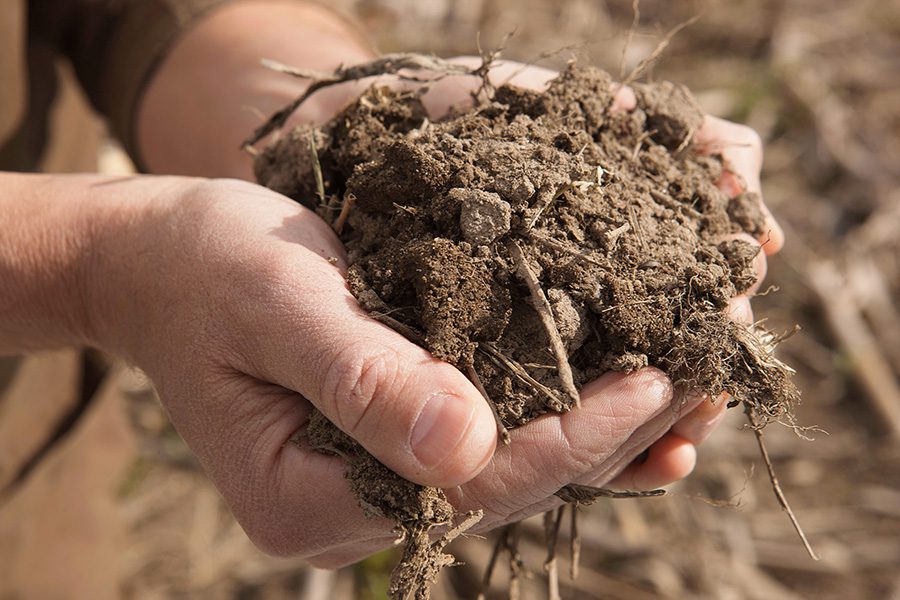
Our soil is alive. It can be teeming with biology from micro to macroorganisms. These “bugs” can be detrimental for plants that cause and carry diseases. However, many do just the opposite and make our plants healthier while increasing yields. They mine nutrients, secrete compounds that upregulate genes, induce resistance responses and create soil aggregates with organic secretions. How healthy your soil is has been hard to define for years, but we can measure some of it.
There are tests at most of our labs that can measure the CO2 that is produced by a specific volume of soil. Soil is incubated at 68 degrees F for 24 hours at a specific moisture. Biology flourishes in these parameters. Biology respires CO2, and by measuring how much comes off in 24 hours, we can estimate how much biology is in your soil.
There are several benefits that happen when soil is functioning properly. CO2 in your soil will turn to carbonic acid when it reacts with water, further acidifying your rhizosphere. Total soil may be creeping up in pH in Western soils, but the proportionally higher biological colonies in the immediate vicinity of roots can create this more favorable condition on a smaller scale. Mass flow and diffusion of nutrients will be enhanced where it needs to be functioning properly, in the immediate root zone.
Managing Nitrogen Through Yeast and Microbes
Yeast is the main driver for CO2 respiration. As yeasts turn nitrogen into protein, we can also measure expected nitrogen release from a soil each year. Measuring CO2 off-gassing can help estimate the amount of yeasts in the soil. The more yeasts, the less N we may need to apply for sufficiency, depending on the yield required for profitability. I always like to say it’s not what you put on, it’s what you get in. If N becomes more efficient, and more is assimilated into your plants with less inputs, we win on two fronts.
There is a company, Microbiometer, that can measure your bacteria-to-fungi ratios in field in about 20 minutes. Depending on the ratio you are looking for, knowing what your soil is currently registering at will help determine what inoculants or inputs we need to fix it. A Sierra soil with minimal structure, depth and usually granitic in nature may have a 100-to-1 or even up to 1,000-to-1 fungal-to-bacterial ratio. Fungi break down woody substances and matter very high in carbon. Fungi also use their hyphae to both surround and penetrate roots in a symbiotic relationship. Mycorrhizae in native environments create an extra root-like net that assimilates more nutrients into the roots. Agricultural soil that has been worked for production can have a 0.1-to-1-to-1 fungal-to-bacterial ratio. Bacteria and yeasts tend to be more N dependent than C dependent. This can also affect your compost or cover crop requirements in the fall and help make those decisions more effective.
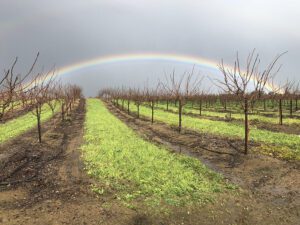
Impact of Chemicals and Fertility on Soil Balance
In season, we use herbicides to keep our orchard floors or berms clean. Glyphosate was created to help clean up water in municipal systems as a powerful chelator. Chelators hold nutrients more tightly than stable soil C substances. This can make nutrients like manganese and zinc less available to plants and soil biology. These nutrients are needed for enzymatic reactions. Soil biology can help break this powerful chemical down. Fungicides are sprayed more heavily in the spring when soils are heating up and fall cover crops and leaf detritus are breaking down. Fungi are critical for this breakdown, but the spray that falls to the ground knocks this back. This can denigrate your fungal-to-bacterial ratio. Heavy, N-dominant fertility shots in the spring can also affect this ratio. I always recommend spoon-feeding smaller shots more often. This is better for the plant, less leaching and soil health.

Of course, this is my passion. My company, Ultra Gro, has been adding active soil biology to our fertility with C sources for over 40 years. What seemed like a sales pitch at its inception has now proven to be extremely effective at increasing soil health. The industry welcomes more companies to the market that are implementing these practices to make our farms more efficient. Biological research has more tools every year to determine which species are more beneficial than others. Being able to measure it can prove to you how effective focusing on soil health can be.
Soil biology also secretes stable C structures into the soil that can bind soil into aggregates. Less disease pressure, better nutrient use efficiency, systemic pathogen resistance and increased soil aggregation and water holding capacity make perfect sense to me. Increased soil C will hold more water. A 1% increase in soil organic matter can hold 20,000 more gallons of water. Think about that. I have 154 trees per acre. Keeping an extra 130 gallons of water per tree remaining in the root zone during each irrigation can be a game changer for me in a restricted water area. It may actually save my orchard and allow me to continue to farm through California’s draconian cuts and delivery practices.