


Listen to the audio version of this article. (Generated by A.I.)
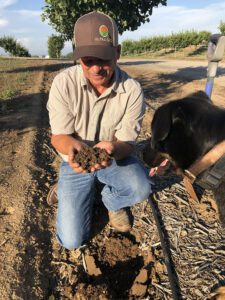
Your soil is teeming with biology. Or at least it should be. I’ve read reports that soil can harbor more than a billion individual cells of bacteria per gram (Howard 2017). Much of this activity is critical to orchard health and recovery. Minerals and nutrients are unlocked for absorption by biological enzymatic reactions and exudates. Plant antibiotics are produced by soil biology to keep unwanted strains at bay or eliminated. Microbiology in the soil can also influence what type of macrobiology flourishes beneath our feet. There is more happening under the soil than what we see in the crops that support our industry. Just as importantly we can help influence that biology.
The Biology Behind Better Farming
The late Dr. Sidhu of Fresno State fame brewed biological strains that we add to our fertilizer to this day at Ultra Gro. He used to call them the cooks in the kitchen. The soil was the kitchen, the nutrients the groceries and the enzymes the recipes. Actinomycetes is a major player in making phosphorus more available to plants. Bacillus is essential for iron assimilation and efficacy especially in higher pH soils. Pseudomonas is a major player in getting potassium from our soil into our trees. Mycorrhizae are long filamentous soil biology that can extend the root mass area significantly. Creating a soil with more biodiversity can make mycorrhizae flourish. Further differentiation of specific strains have continued to show a more diverse profile of chemical exudates that generated more beneficial reactions.
Research has shown soil biology can create siderophores to sequester iron a critical nutrient for all life. Ron Helland of SOBEC fame gave a lecture to our team that included a video highlighting siderophore action. Lines were clearly drawn where you could see the battle ensue escalate and end with pathogens being defeated through siderophore creation. Removing the iron from the enemy was akin to penetrating enemy lines and removing the food from fighting soldiers. Heavy metals can also be sequestered through siderophore reactions. Bacteria fungi protozoa and archaea are critical for soil health by overpowering and creating a healthy balance of beneficial soil life.
How Fermentation and Fungi Support fertility
We also use products that are derivatives of yeast reactions. Joe Mullinax the founder of Cubeterra and Denele Labs in Turlock uses a lactic acid fermentation process to make micronutrients more available to plants. When yeasts multiply, they create propagules. Adding those to the soil reinoculates the soil with yeast. As yeast flourishes it off gases CO2. CO2 reacts with water to make carbonic acid which makes the rhizosphere more acidic naturally. Yeasts can be composed of 40 to 60 percent protein by dry weight. That protein has all the essential amino acids in it. That’s a lot of very stable and available nitrogen. Yeasts also make other macro and micronutrients more available for plant assimilation. We can actually use a measure of soil health by incubating soil for 24 hours and measuring the gas produced. The more gas the more soil biology. Do you see a pattern?
What Harms and Helps Your Soil Biology
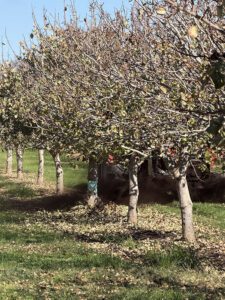
Typical practices such as compost applications cover crops and soil amendments will always have a place in agriculture to create sustainable and regenerative farming. However, when issues arise and we need to spray fungicides herbicides and pesticides these can all knock back our soil biology. When we use sulfuric acid line cleaners add too much of a specific soil amendment over water under water till our soil or compact it, we can once again knock back our soil biology. Compost if it’s worth its weight has been broken down for year or more. But there is still some digestion that needs to happen to get the full benefit out of it.
How can we help ourselves? Add some active biology to the irrigation or spray it on the berms after spreading your compost. Spray it over your cover crops at germination or seeding to help make a better stand. Run an irrigation set without an acid titration to sink some biology into the soil a few inches. Add it to your NPK applications. There are strains that can help assimilate foliar nutrition as well. Add it to the spray tank. Using active biology in the transplant water for many of our other crops continues to prove the benefits of doing the same when replanting an orchard. Start your trees out with a better approach. Make soil healthier earlier.
Let Biology Lighten the Load
Soil biology is key to produce optimal yields. A continuous stream of biology planned with your fertility applications can dramatically increase the success of your operation. Farming is hard enough. Add some biology to help you and mother nature make it that much more effective.
References
Howard L, “Uncovering the hidden life of soil”, www.ucdavis.edu/news/uncovering-hidden-life-soil# the March 02 2017