

Listen to the audio version of this article. (Generated by A.I.)
Tree nut growers in the north and south San Joaquin Valley are improving their irrigation system maintenance routines, recognizing the cost and water savings. For those growers who need assistance, mobile lab managers are there to help.
Kevin Greer, irrigation lab project manager with the Tehama Resource Conservation District (RCD), and Beth Hilbe, district manager of Northwest Kern RCD, confirmed tree nut growers are paying more attention to irrigation system maintenance to deal with increasing costs of water and energy. Growers who want advice and recommendations for their systems can call their RCD to schedule a visit from mobile lab technicians who can evaluate their systems.
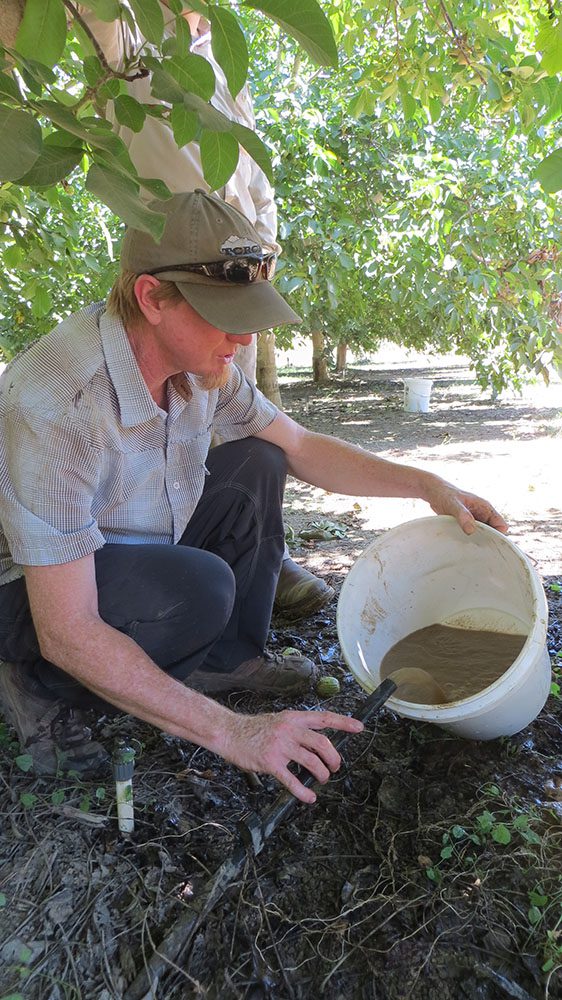
In addition to regular system maintenance, several RCDs in the Central Valley offer a free on-site evaluation of irrigation systems and provide comprehensive reports to producers that detail how their irrigation system is performing, including tips, suggestions and recommendations based on data collected during the inspection.
As project manager and operator of the mobile irrigation lab, Greer said he sees a little less pressure on maintenance where water is less expensive. Hilbe has growers with different water challenges, including salinity. She said growers pay attention to preventive maintenance to save costs.
SWEEP Funding Helps with Upgrades
Costs to comply with Sustainable Groundwater Management Act rules and higher input costs have directed more focus on irrigation efficiency, Greer said. With CDFA’s SWEEP program funding, more advanced systems are being installed in orchards and more older systems are being upgraded. This funding is an opportunity for needed pump retrofits, conversion of filter systems or adding automation to irrigation systems, Greer said.
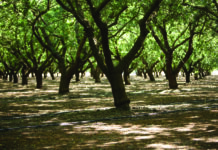
Tree nut orchards in the north valley typically use microdrip, microsprinkler or solid-set systems with rotator or impact sprinklers, Greer said. Each of these systems has issues, and the common thread is always maintenance. Keeping irrigation systems clean of debris, no matter the type of system, should be at the top of the list. Growers need to replace components on a regular basis to maintain efficiency.
“That starts with good filtration at the pump in addition to consistently flushing out valves and checking lines,” Greer said.
‘… when preparing for an irrigation system evaluation by the mobile lab field techs, growers should try to have their systems operating when they think it is the most optimal.’
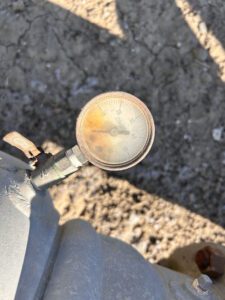
One location to pay attention to is the pump station, where pressure gauges and flow meters are old, broken or unreadable. Pressure gauges provide valuable information about pressure into the system and debris buildup in the filter. Greer said information provided by the gauges is valuable for determining the frequency of filtration system maintenance. Regular reading and replacement, as needed, of pressure gauges before and after the filtration system or a two-way ball valve is strongly suggested.
Another component that provides vital information is the flow meter. Installing and maintaining flow meters at all pump stations is highly recommended. They allow users to determine specific quantities of water being applied and can also provide information about changes that may be occurring with the pump, which can aid in determining maintenance scheduling.
Common Issue
Greer said a common issue he sees is irrigation operators unfamiliar with the original design plans of the system. Those plans provide valuable information that details proper system operation and the associated specs for all installed components. Those details include how much pressure from the pump is required to operate the system, what size nozzles or emitters are to be used and what their flow rates should be.
Different soil and water conditions in the south valley can present extra challenges in irrigation system maintenance. Hilbe said that depending on the area, poor water quality can mean more maintenance issues.
Hilbe’s mobile lab is the oldest in the state and covers the most acres. Unlike northern labs, the Northwest Kern lab operates from February to November.
Hilbe said growers in northwest Kern County understand that preventive maintenance is critical to keeping systems operating efficiently. Most of the tree nut growers have micro sprinkler systems. Plugging and purging of irrigation lines are the most common issues they deal with. Outlet plugging in drip tape is commonly caused by soil ingestion. When field plugging is suspected, the filtration site is the place to start. Good flushing practices need velocity, duration and timing. Plugging by organic material inside the emission devices may require chemical treatment. Irrigation systems will need to be flushed after the treatment to remove large-scale debris.
Preparing for a System Evaluation
Greer said that when preparing for an irrigation system evaluation by the mobile lab field techs, growers should try to have their systems operating when they think it is the most optimal. That is, maintenance issues should be worked out prior to their arrival so the measured application rate and distribution uniformity of the system are the most accurate.
For example, Greer said growers should ensure pressure from the pump station is adequate for all components of the system to operate. If a filtration system at the pump is full of debris, then input pressure into the irrigation system will be lower and the application rate of the system will drop as a result. Some hardware or equipment like pressure regulators, valves or pressure compensating sprinklers and emitters may not operate properly without the proper amount of pressure.
The evaluations usually take one to three hours, depending on the number of acres and complexity of the system. The grower or system operator does not need to be present. Greer said turning on the system 30 to 60 minutes before their scheduled arrival is preferred to see all parts pressured up so any potential issues can be worked out. When the evaluation is complete, the mobile lab techs will notify contacts so water can be moved to other locations for additional evaluations.
Greer said that since he took over the program in 2009, he averages 70 to 80 system evaluations per year, depending on funding.
Greer noted that in his part of the state, system evaluations are over for the season. They will resume in spring 2026 when weather and soil conditions allow.

Cecilia Parsons | Associate Editor
Cecilia Parsons has lived in the Central Valley community of Ducor since 1976, covering agriculture for numerous agricultural publications over the years. She has found and nurtured many wonderful and helpful contacts in the ag community, including the UCCE advisors, allowing for news coverage that focuses on the basics of food production.
She is always on the search for new ag topics that can help growers and processors in the San Joaquin Valley improve their bottom line.
In her free time, Cecilia rides her horse, Holly in ranch versatility shows and raises registered Shetland sheep which she exhibits at county and state fairs during the summer.