


Listen to the audio version of this article. (Generated by A.I.)
Market discipline, quality accountability and long-term orchard solutions were central topics at this year’s California Walnut Conference in Turlock. Presentations addressed handler structure, crop forecasting, retail quality standards, food service innovation and orchard management challenges. From handler consolidation to nematode-resistant rootstocks, speakers focused on operational adjustments across the production and marketing chain.
California Walnut Board and Commission President and CEO Robert Verloop opened the conference with a straightforward look at the industry’s structure.

California’s walnut sector includes roughly 3,700 growers and about 380,000 producing acres. Approximately 65% of acreage is less than 19 years old, a statistic Verloop often uses to demonstrate to international buyers that the production base remains strong and modern. But production capacity is only part of the equation. 80% of the crop moves through the top 17 handlers, and 90% through the top 27. Verloop argued that the number of sales organizations competing in the marketplace is working against growers.
“This industry needs to consolidate,” Verloop said. “We have too many salespeople or sales organizations that are dependent on brokers and traders to move the crop.”
He said when multiple handlers compete aggressively for the same buyers, the result is often downward pressure on price, a burden that ends up being carried by the growers. Rather than competing internally, Verloop said the industry needs to focus on expanding overall consumption and strengthening its negotiating position in export markets.
He also addressed grower frustration over this season’s crop estimate miss. The final crop came in roughly 200 million pounds larger than projected, which created midseason uncertainty and affected inventory planning and sales pacing during a key marketing period.
“When you’re off that much in the middle of the selling season, it changes everything,” Verloop said.
Handlers adjusted as the true size of the crop became clear, which affected pricing momentum. The board and commission are now evaluating improvements to crop forecasting methods, including incorporating new technology and revisiting how and when numbers are released.
Protecting the Brand Through Quality
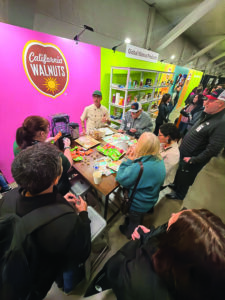
Beyond volume and trade, Verloop emphasized quality control, particularly at retail. The board has launched a retail quality testing program to measure peroxide value and other indicators tied to rancidity and shelf life, with early testing revealing a significant portion of walnuts on store shelves exceeded internal quality standards.
“We’ve got to close that gap,” Verloop said.
Low-quality product, especially from secondary brands or unclear sourcing, can damage category perception and slow repeat purchases. To address the issue, the board is developing retailer scorecards and exploring a California premium designation in coordination with CDFA to create export-level differentiation.
For growers, the effort aims to protect the long-term reputation of California walnuts and ensure quality leaving the orchard is reflected at the consumer level.
Repositioning Walnuts for Modern Consumers
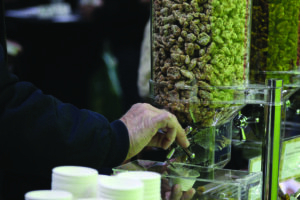
Consumption remains a central concern. In the U.S., average walnut purchase frequency remains low compared to many export markets. Verloop stressed the need to move beyond baking aisle associations and connect with younger consumers.
“We need to be more than grandma’s banana nut bread,” he said.
Roughly half of U.S. food dollars flow through food service channels like restaurants, universities and institutional dining, but walnuts have historically held a limited presence in them. That opportunity was the focus of comments by Chef Robert Danhi, chef in residence for the California Walnut Board and Commission.
Danhi said that while California walnuts are widely recognized for quality, that alone doesn’t guarantee their place on the menu.
“California walnuts are exceptional, but the reality is that’s not enough.” — Robert Danhi
“California walnuts are exceptional, but the reality is that’s not enough,” Danhi said.
His strategy centers on transforming walnuts from a simple ingredient add-on to food like brownies and salads, into a functional component that operators can build entire menus around. That includes new applications like walnut-based creams and sauces designed to replace or supplement dairy components.
“If we influence menus where consumers eat, we also influence what they eat at home,” he said.
Danhi has also been working with chefs, distributors and product developers to identify operational barriers. Bulk packaging formats, portion control and shelf stability were each identified as challenges. By changing walnuts’ form through grinding, blending or restructuring them into new formats, he said the industry can increase perceived value and usage frequency.
“Food service is often where culinary trends begin,” Danhi said. “We have to be part of it.”
The board is also updating technical guides for operators and developing digital resources aimed at making walnut adoption easier across restaurant and institutional settings.
Industrywide Challenges Shape Conference Discussion
While market and marketing discussions dominated much of the program, orchard health and pest pressures were also key topics. Presentations covered walnut root lesion nematode management in replant situations, new rootstock developments showing improved performance under nematode pressure and ongoing efforts to refine alternatives to traditional soil fumigation.
Vertebrate pest control options for ground squirrels, roof rats and gophers were also reviewed, with emphasis on proper application methods, label compliance and selecting the right tool for specific orchard conditions. Speakers highlighted the importance of calibration, timing and adherence to regulatory requirements to ensure both efficacy and safety in orchard systems.
Additional sessions throughout the day addressed export market dynamics, India trade developments, retail partnerships, sustainability messaging and updated marketing strategies aimed at increasing domestic consumption.
As discussions wrapped, speakers revisited themes of coordination across handlers, growers, marketers and retail partners. Topics ranged from consolidation and quality enforcement to culinary innovation and export positioning, reflecting the range of structural and market challenges facing the industry.