 TM
TM
As you sit and read this article, what comes to mind as the most pressing issues facing Californians today? Water? Cost of living? Homelessness? Am I going to be driving an electric car next year? Of all the things we must worry about, and that we hope our state legislators are addressing, what makes your list? Well, this is California, so let me ask this question: Is the naming of the “state wasp” one of your top 10 issues? Top 100? Top 1,000? Well, for some in California it must be because Sen. Eloise Reyes has introduced SB 1178, which would name the yellowjacket as the “official state wasp.”
That’s right. We will spend legislative time and effort and taxpayer dollars to hold multiple hearings and debate the naming of the state wasp. Now if that isn’t enough, Sen. Rosilicie Ochoa Bogh has introduced SB 1214 to name the painted lady butterfly as the “state butterfly.” Yep, more time, effort and money on important, life-threatening issues facing California. Given the magnitude of the serious issues Californians face every day, I personally struggle with things like this. It’s no wonder our state is in the shape it is.
Putting that aside for the time being, let’s get serious and look at what 2026 will bring in terms of bills that matter.
Major Bills to Watch
AB 1654 (DeMaio) This bill would require DMV to verify the applicant’s lawful presence in the United States before issuing or renewing a commercial driver’s license.
AB 1677 (Boerner) This bill would state the intent of the legislature to enact further legislation to require electric and gas utilities to reduce ratepayer bills by 25%.
AB 1731 (Wilson) This bill would require school food purchases to source food that is whole or minimally processed, grown or processed in California using climate-smart agriculture practices and production systems.
AB 1777 (Garcia) This is one of the major issue bills we will be dealing with in 2026. This legislation would give California Air Resources Board (CARB)unbridled authority to regulate “indirect sources” of air pollution, which includes trucks and cars coming to and from businesses, such as trucks hauling almonds to the almond huller and the forklifts used to move bins around. This is a very far-reaching and intensely impactful bill if passed.
AB 2026 (Aguiar-Curry) This legislation would enact future legislation to further increase groundwater storage and remove impediments to recharge.
AB 2184 (Wilson) This bill would appropriate $300 million from the Greenhouse Gas Reduction Fund to achieve “nature-based climate solutions,” with $150 million going to the Natural Resources Agency and $50 million going to CDFA, and the remainder to be spent at the discretion of the Legislature. While the intent is good, we have serious issues with how this money will be spent and whether it will really help the agricultural industry. We would rather see the money go to the FARMER tractor replacement program or the Ag Burn Alternatives Program.
AB 2192 (Gonzalez) Currently, equipment purchased for use in production and harvesting of agricultural products is exempt from the state portion of the Sales and Use Tax. This bill would extend the exemption to local taxes.
AB 2380 (Papan) An increase in pest control registration fees will be in order if this bill is passed. Current limits on registration fees would be repealed, and the maximum fee would increase from $25 to $75.
AB 2447 (Bauer-Kahan) In what promises to be one of the most contentious pieces of legislation for 2026, this bill would require the State Water Resources Control Board to require the regional boards to update the Irrigated Lands Regulatory Program to reduce nitrogen waste discharges from commercial irrigated agricultural areas, as provided. The bill would require the regional boards to adopt revised orders with waste discharge requirements on or before Jan. 1, 2028, that are sufficient to meet certain reductions in nitrogen waste discharges. The bill would require the state board to, on or before July 1, 2027, publish both a list of standardized crop names and categories and a statewide methodology for calculating and field-level reporting of nitrogen balances for croplands, including nitrogen fertilizer applications and nitrogen discharges, that account for available soil nitrogen, to be used by the regional boards and incorporated into the revised orders. The bill would require the state board, on or before Jan. 1, 2031, and in coordination with the regional boards, to submit a report to the relevant policy committees of the Legislature on progress achieved in implementing these requirements, including data on the extent of progress made toward reducing nitrogen waste discharges, as provided. The bill would, upon appropriation of funds by the Legislature, require the state board to convene a Safer Fertilizer Task Force in coordination with the Department of Food and Agriculture to establish best available technology standards for nitrogen-based fertilizers.
‘In what promises to be one of the most contentious pieces of legislation for 2026, this bill would require the State Water Resources Control Board to require the regional boards to update the Irrigated Lands Regulatory Program.’
Agriculture Concerns
AB 2646 (Krell) This legislation would increase the minimum wage for “approved agricultural employee” to be $19.75 per hour. This would be specific to H-2A employees.
SB 872 (McNerney) This bill would take $150 million from the Greenhouse Gas Reduction Fund and appropriate it to the San Joaquin Delta Conservancy for improving levees and another $150 million to the Department of Water Resources for supporting capital improvements in the state water conveyance systems.
SB 921 (Grove) This bill would create a tax credit in an amount equal to the amount of overtime wages for agricultural employees.
SB 1163 (Choi) This bill would prohibit “prohibited foreign actors” from purchasing agricultural land in California. Prohibited foreign actors are defined as countries designated as a nonmarket economy or a country that poses a threat to the national security of the U.S.
Bottom Line
All in all, it appears to be a relatively mild year legislatively speaking and somewhat indicative of an election year. However, there are several “spot bills” that will end up with who knows what language. We will need to monitor legislation as the year rolls on. As a thought, maybe, just maybe, we can come up with some other bugs that need to have “state recognition status” and we can keep them busy enough to not move on the typical legislation that negatively harms business in California. Do we have a “state worm”? State fly? State dog? Send us your suggestions!
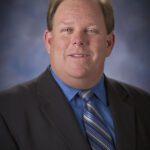
By Roger A. Isom | President/CEO, Western Agricultural Processors Association
Roger is President/CEO of the California Cotton Ginners and Growers Association and Western Tree Nut Association. He brings over 30 years of regulatory and legislative advocacy experience, specializing in environmental and safety matters. Roger’s responsibilities include the management of both Associations’ staff and day-to-day operations. Roger is also the President of the Ag Energy Consumers Association (AECA), board member and Past President of the Ag One Foundation at California State University Fresno, and manages the Navel Orangeworm Action Committee (NOWAC).