

Listen to the audio version of this article. (Generated by A.I.)
Oregon State University (OSU) researchers, with help from industry funding and a federal wildlife specialist, are stepping up efforts targeting a rodent destructive to multiple Willamette Valley crops, including hazelnuts.
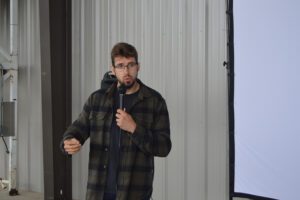
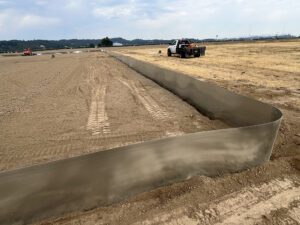
At the Nut Growers Society Summer Tour, Aug. 6 in Dayton, Ore., OSU Wildlife Ecologist Joshua Twining said researchers have significantly expanded their capacity to study voles by installing four vole enclosures of just under an acre each at Hyslop Research Farm near Corvallis. The enclosures, which are being used to monitor vole activity and test control tactics, coupled with cage trials and other projects now in place, represent what is believed to be the most ambitious effort ever to understand what does and doesn’t work when it comes to managing voles.
“These half-hectare enclosures are going to be able to support full vole populations and allow us to conduct a series of experimental trials where we’re trying to work out what works and what doesn’t when it comes to control methods and develop a toolkit for growers and producers in different situations to be able to control voles when they need to most,” Twining said.
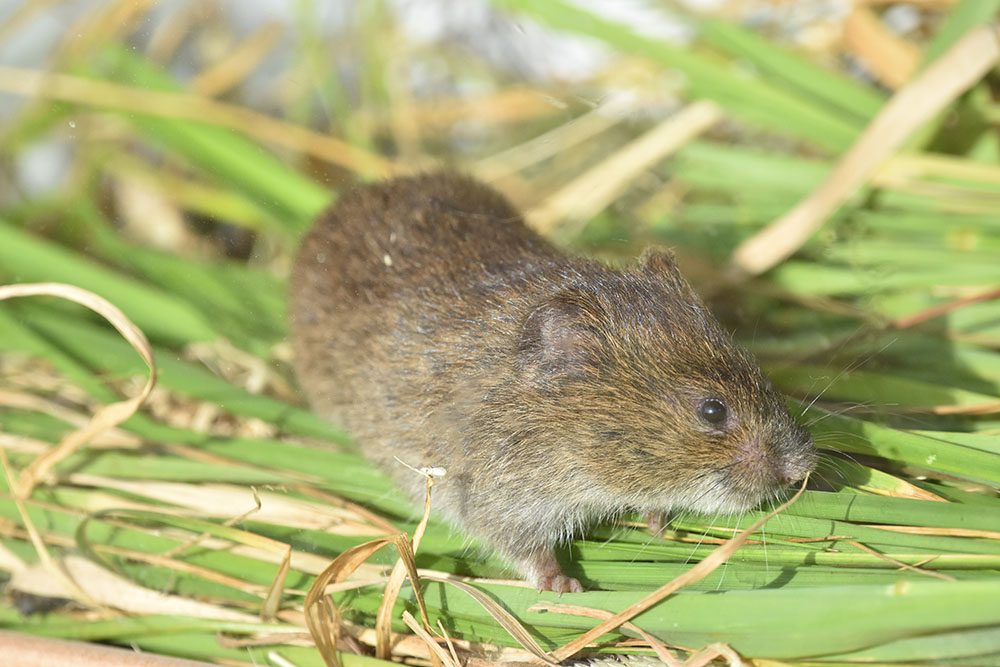
Endemic to Oregon’s Willamette Valley, the gray-tailed vole (Microtus canicaudus) has inflicted enormous economic damage on Oregon growers in reduced yield and added control costs for decades. The pest infests primarily field crops, such as grass seed, but also is problematic in hazelnuts, particularly in years when its populations spike or when adjacent crop management activities, such as crop termination, cause mass migrations of the pest into orchards.
Attracted to Cover Crops
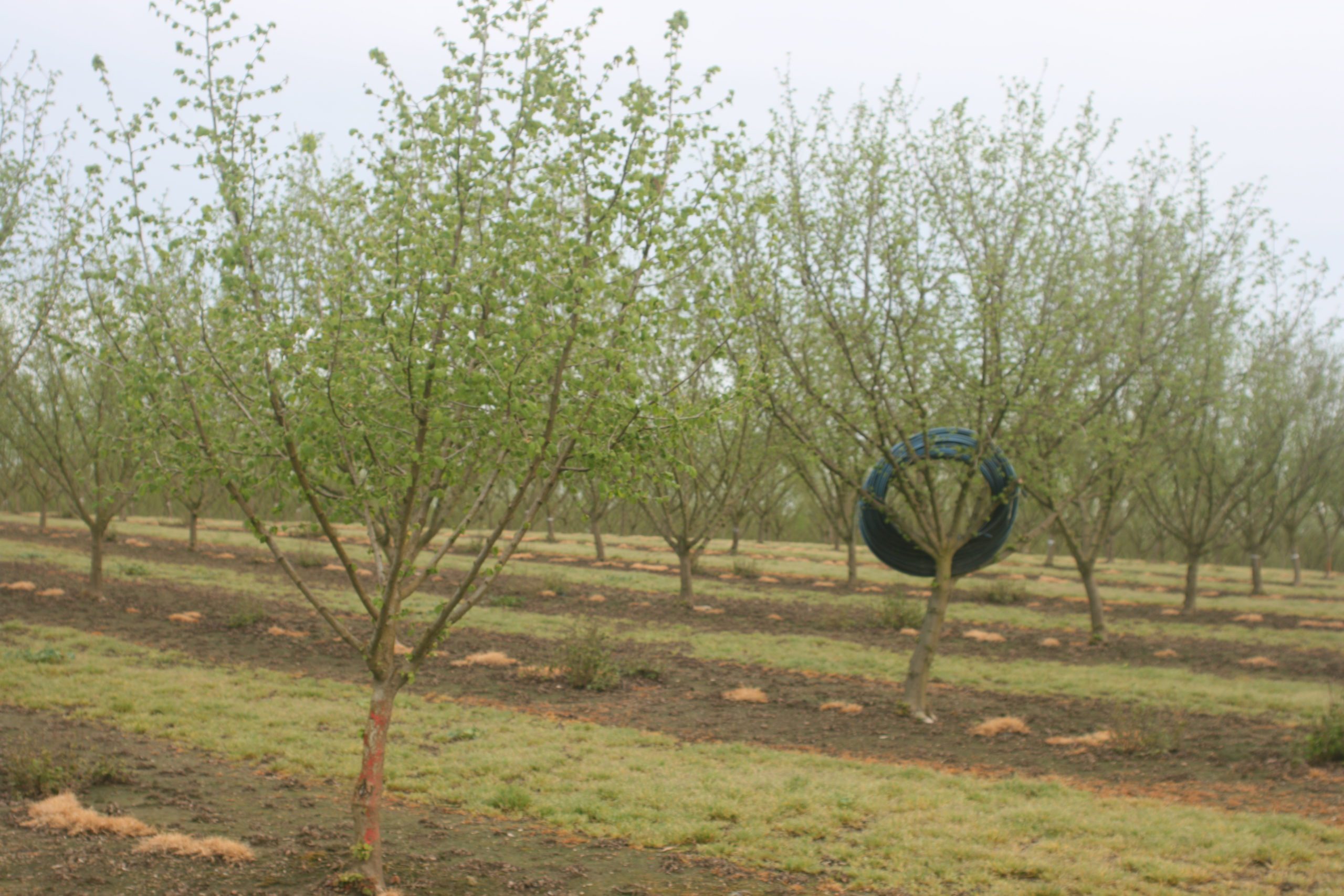
According to OSU Extension Orchard Specialist Nik Wiman, hazelnut orchards with cover crops and intercrops are particularly susceptible to vole infestation. “In some cases, populations build in the orchard in the cover crop or the intercrop, which is then terminated, sending the voles to the trees,” Wiman said. “When they are desperate for water and possibly nourishment, they girdle trunks and roots, which can cause tree death.”
The pest is particularly problematic to young trees, said OSU Extension Wildlife Specialist Dana Sanchez, who has been studying voles for the past five years. Voles also will create burrows that impede harvest efficiencies and other management practices, Sanchez said.
Researchers have tested multiple methods to monitor and control the pest in recent years, but none have proven particularly effective. They have employed drones mounted with cameras to monitor pest populations and used dogs to help identify active burrows to improve control efficiencies by reducing scouting time. And researchers have performed multiple studies measuring bait efficacy and bait attractiveness of currently registered zinc phosphide oat baits. While the baits are effective when ingested, having kill rates topping 95% in cage trials, their attractiveness has been an issue of concern.
In one study that involved mounting motion cameras in Willamette Valley fields to monitor vole interactions with zinc phosphide baits in spring and early summer 2021, Aaron Shiels, a research scientist at USDA’s National Wildlife Research Center in Fort Collins, Col., said voles appeared uninterested in the baits.
“They [the voles] were passing by the baits. They weren’t stopping to taste or consume the baits, and we didn’t have effectiveness in reducing the population,” Shiels said.
Two Main Projects
Today, Twining, an assistant professor in OSU’s Department of Fisheries, Wildlife and Conservation Sciences, said OSU researchers are focusing on two main projects. In addition to studying vole activity and control tactics in the vole enclosures, they are engaged in a long-term project to monitor natural grassland sites in the Willamette Valley to try to understand why populations erupt and crash in a cyclical fashion.
“We’re trying to get this long-term data on a small number of populations so we can start to understand what’s driving these [population] cycles,” Twining said at the Nut Growers Society meeting. In these studies, researchers are setting live traps for one week of each month throughout the year and tracking them through time.
To date, it has been difficult for growers to make informed decisions on vole management, Twining said, in large part because there is little understanding of what is driving population cycles. “This makes making accurate predictions almost impossible, which makes management extremely challenging,” he said at a recent Vole Summit, which drew producers from multiple industries to a meeting room in Salem, including many hazelnut growers.
“When [voles] are desperate for water and possibly nourishment, they girdle trunks and roots, which can cause tree death.”
– Nik Wiman, Oregon State University
In the enclosures, now in place at Hyslop Research Farm near Corvallis, researchers will be testing a variety of control options, Twining said, and they also hope to gain a better understanding of vole biology, which can help inform what drives population cycles to spike and crash. Twining said the four 0.4-hectare enclosures are large enough to show vole population dynamics while small enough to facilitate replicated experiments of different control tools.
Twining noted that OSU researchers had vole enclosures one other time in the 1990s, but the enclosures were less than half as large as those now in place.
“What we’re doing is bringing them back, but bigger and better than before,” he said. “And really, for us, this is going to be the key to producing the evidence we need that can help guide and answer questions like, ‘What are the best ways to manage voles?’”
Twining’s team hopes to eventually construct 12 enclosures at Hyslop, hoping to add four more each of the next two years, with hopes to secure funds from various groups to contribute toward their construction.
Cage Trials
Researchers also are conducting bait efficacy studies in cage trials with different baits. And they are adding different coatings to baits to see if that can improve bait interactions.
The cage trials are being conducted at the National Wildlife Research Center. Voles being used in the study were captured in the Willamette Valley and transported to the USDA lab for research purposes.
Twining, who came to OSU in 2024 in part to focus on population ecology of voles, formerly held a postdoctoral research position at Cornell University. He obtained his Ph.D. in 2020 from Queen’s University Belfast in the United Kingdom. He also holds a master’s degree in ecology from Imperial College London and a bachelor’s degree in biology from the University of Birmingham in England.
As part of his approach, Twining has formed the Willamette Vole Management Working Group, made up of researchers, agency officials and stakeholders to help ensure that the work he is doing is relevant to the industry. “We are making sure everybody has a voice and that the work we are doing is guided by local, on-the-ground, ecological knowledge and has applicable outputs,” he said.
To date, Twining said, growers have two main obstacles: They don’t know when vole populations will spike and they don’t have effective control tools. “And so the research program I’ve been developing is really trying to address these two main challenges,” he said.
Twining has asked that growers who are interested in joining the work group contact him at joshua.twining@oregonstate.edu.