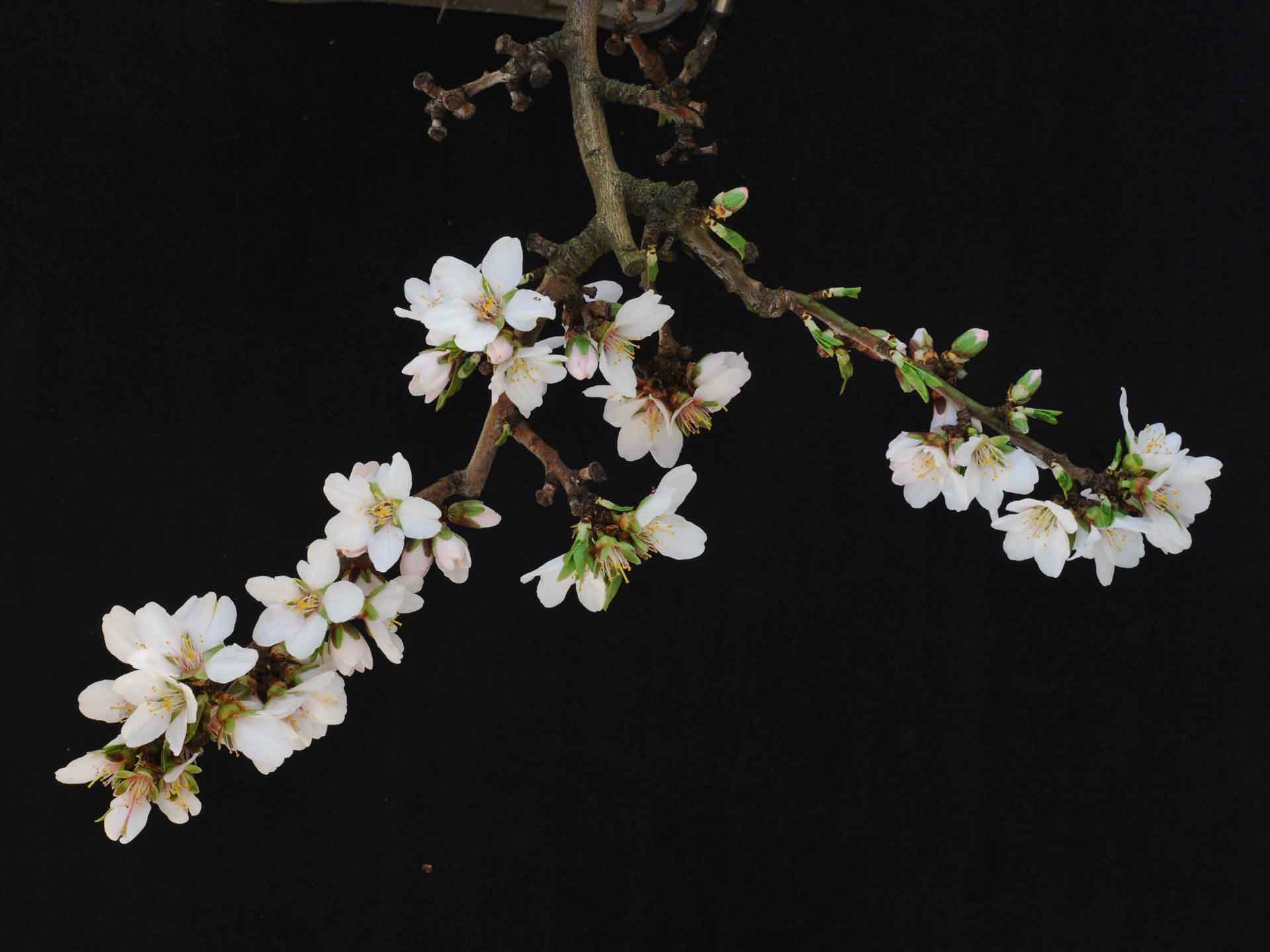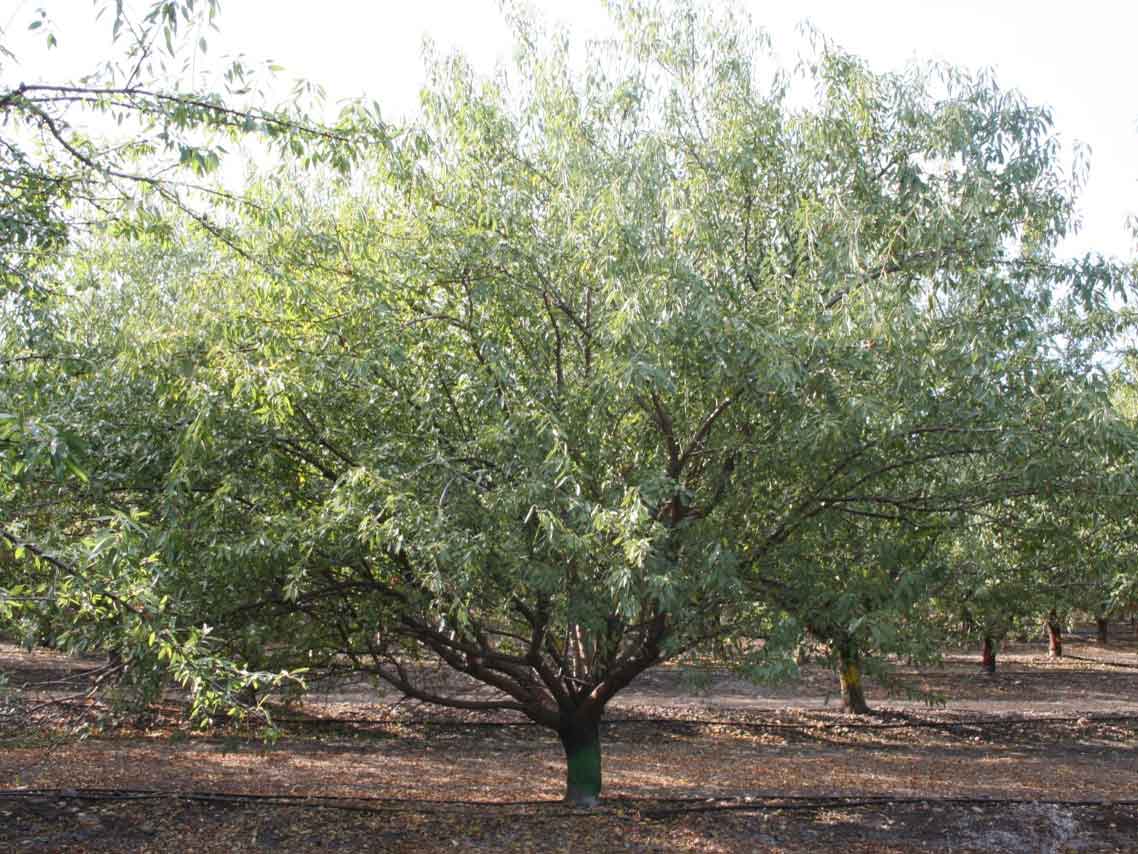



A disease virtually unknown to California almonds two seasons ago is now present across every major almond-producing county. Researchers at UC Davis say red leaf blotch, first detected in May 2024, has shown an aggressive spread pattern and requires early statewide attention to prevent severe yield impacts.
At the 2025 Crop Consultant Conference in September, UC Davis plant pathologists Florent Trouillas and Alejandro Hernandez shared updates on the disease’s rapid expansion and what growers should expect in the coming year.
Last season, surveys found red leaf blotch in only five counties. By harvest 2025, the disease had spread throughout the Sacramento Valley, northern San Joaquin Valley and southern growing regions. Researchers warn that even orchards showing only a few infected leaves this year may face severe outbreaks next spring.
Make Note of Pathogen Latency
Red leaf blotch is caused by Polystigma amygdalinum, a latent pathogen. According to Trouillas, most infections occur between early February and mid-March as overwintering spores land on emerging leaves. But symptoms do not develop until 35 to 45 days later. By the time growers notice red-orange lesions in April or May, the latency window is long past.
This has major implications for spray timing. “With Polystigma, waiting for symptoms will not work,” Trouillas said. “By the time you see the leaf spots, the pathogen is already well established. Preventive fungicide applications at petal fall and again two to three weeks after petal fall are absolutely critical.”
He and Hernandez emphasized that red leaf blotch cannot be a “skip” disease in spray programs. Even minimal incidence can explode the following season, driven by rapid spore production. Early protection is the only realistic path to avoiding the year-to-year escalation seen in Spain and other almond-growing regions affected by the disease.
Fungicide testing efforts are moving quickly thanks to close cooperation with ag chemical companies. Many mixed-mode fungicides evaluated this year performed well in trials and UC Davis expects most of those products to have registrations or label extensions for red leaf blotch management by 2026. Biocontrol options, however, have not shown promising results to date.
Some growers have asked about cultural management, including leaf removal or treating leaf litter with urea or sulfur. While these approaches have been studied internationally, Trouillas and Hernandez cautioned that the results often do not justify the cost or labor in commercial orchards, especially when neighboring blocks are unmanaged.
Clearing leaf litter could be useful only in a coordinated regionwide effort, they said. Otherwise, inoculum from nearby orchards, including abandoned blocks, will continue to supply fresh spores.
Despite the rapid spread, both Trouillas and Hernandez remain optimistic. “We truly believe we will be able to stay on top of red leaf blotch with the current recommendations and chemicals available,” Hernandez said. “Growers just need to think ahead. Be preventive not combative.”
They encouraged PCAs and growers to monitor new UC and Almond Board of California resources as research expands. Detailed guides, timing charts and local findings are now available online through UC ANR and the board.
Begin planning now for early season protection. With statewide cooperation and preventive sprays at the correct timing, California’s almond industry can manage this emerging threat before it becomes a long-term fixture in the orchard.

Taylor Chalstrom
Taylor is the new Digital Content Editor at JCS Marketing Inc., coming on to the team in June 2020 as an editorial intern. He previously attended Cal Poly, San Luis Obispo, earning a degree in Agricultural Science and a minor in Agricultural Communication. Taylor wrote for AgCircle, Cal Poly’s award-winning agriculture magazine produced by the Brock Center for Agricultural Communication, for two and a half years before becoming Brock’s Associate Editor for writing in his final year at Cal Poly.