


Listen to the audio version of this article. (Generated by A.I.)
A new online tool is giving growers across the West a practical way to select cover crops suited to their farms’ unique conditions.
The Cover Crop Species Selector Tool is the first free, expert-verified database designed specifically for the western United States. The resource allows users to generate tailored species recommendations based on location, soil type and production goals, while also serving as the region’s largest database of cover crop information.
“It’s the first tool of its kind where the data has been vetted by experts in the western United States,” said Sarah Light, UC Cooperative Extension agronomy advisor and president of the Western Cover Crops Council.
“This project was a collaboration between the Western Cover Crops Council, Precision Sustainable Agriculture and the U.S. Department of Agriculture, who provided funding for the work,” Light said. “This partnership enabled the project’s success, as the WCCC verified the data, while PSA provided technical expertise around data stewardship and website development.”
She added that it’s publicly available, and it gives growers localized information they can trust.
Light, who serves Sutter, Yuba and Colusa counties, helped lead the data verification process, which involved input from more than a dozen states. Each state had local control and selected species based on what’s actually used in their region, guided by people familiar with local conditions.
The western region was the last in the U.S. to receive a cover crop species selection tool, largely because of its diversity in soil, climate and cropping systems. The project required extensive coordination among universities, NRCS staff, seed companies and growers across 13 western states.
Light and her team validated data at three levels: across the entire West, by state and by ecoregion. This ensured that species recommendations reflected both research and on-the-ground experience. In California, experts contributed insights specific to Central Valley conditions, adding three native species to the database to reflect growers’ interest in using natives in seed mixes.
Features and Functionality
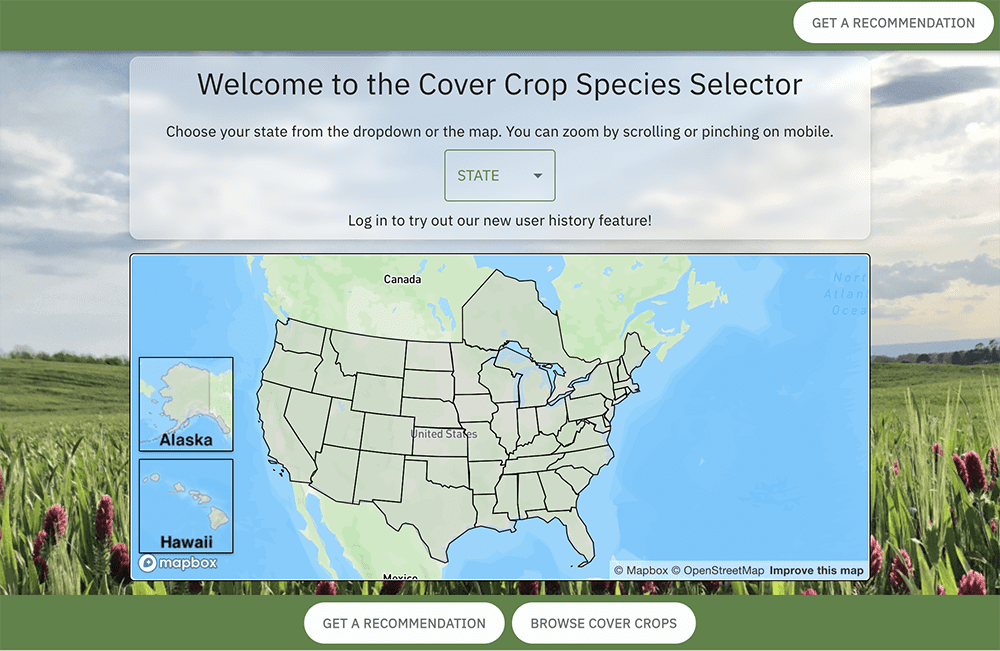
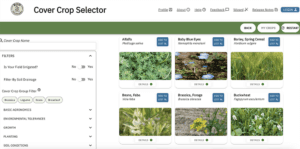
Accessible through westerncovercrops.org, the tool offers two main options: “Get a Recommendation” and “Browse Cover Crops.”
The recommendation tool allows users to enter a field location, goals and management details to generate customized species suggestions. The system automatically integrates soil and climate data from federal databases such as Web Soil Survey, reducing manual input. Users can also fine-tune their results based on drainage class, irrigation plans, or planting and harvest timing.
The browsing function serves as a detailed database for each cover crop, featuring descriptions, photos, seeding rates, growth habits, drought and salinity tolerance, pest risks for cash crops, and termination guidance.
“The comprehensiveness of the information for each species is really unparalleled,” Light said. “It can be used as both a species selector and a cover crop database.”
Termination is a particular focus for California users, where frost does not naturally end the cover crop cycle, she added.
“Termination is the biggest opportunity for a headache,” Light said. “You have to think about the end in the beginning.”
Accounting for the West’s Complexity
Because the western U.S. spans dramatically different climates, from Hawaii to Alaska, ensuring data accuracy was one of the biggest challenges. To ground the tool in real-world conditions, Light said the team relied heavily on local expertise. In California alone, advisors, researchers, NRCS staff, seed company representatives and growers all contributed input to make sure the tool reflected what actually works in the field.
“It’s that local verification that makes the tool different,” she said.
The tool’s flexibility also allows users to refine recommendations for both annual and perennial systems. Light advised growers to start broad when filtering species and then narrow down using agronomic data rather than over-sorting.
“If you sort too heavily, you might end up with too few recommendations,” she said.
Since launching in September 2025, more than 950 California users have explored the tool. Light said early feedback has been positive, with growers noting the platform’s ease of use and clear interface. She and her colleagues plan to continue promoting the tool through extension meetings this fall and winter ahead of the next cover crop planting season.
“I’m really happy people are finding it useful,” she said. “We’ll keep getting the word out to technical assistance providers and natural resource partners so it reaches as many growers as possible.”
A Broader View on Adoption and Impact
WCCC board member Rich Collins is a longtime proponent of cover cropping. He said the Cover Crop Species Selector Tool offers a solid starting point for growers who are new to the practice. While he said there’s no shortage of advanced ag technology and crop protection tools out there, he emphasized the need for more resources that support soil health and water cycle management.
Collins, who farms near Dixon and has been planting cover crops since he was a child, said adoption is growing but resistance remains, often tied to concerns about cost, water use and added management steps. He believes those concerns are understandable but hopes more growers will feel empowered to try cover crops as they gain access to practical tools and solid information.
“I do put a lot of credence and faith in the younger generation,” he said. “I think they’re coming into this with a different perspective.”
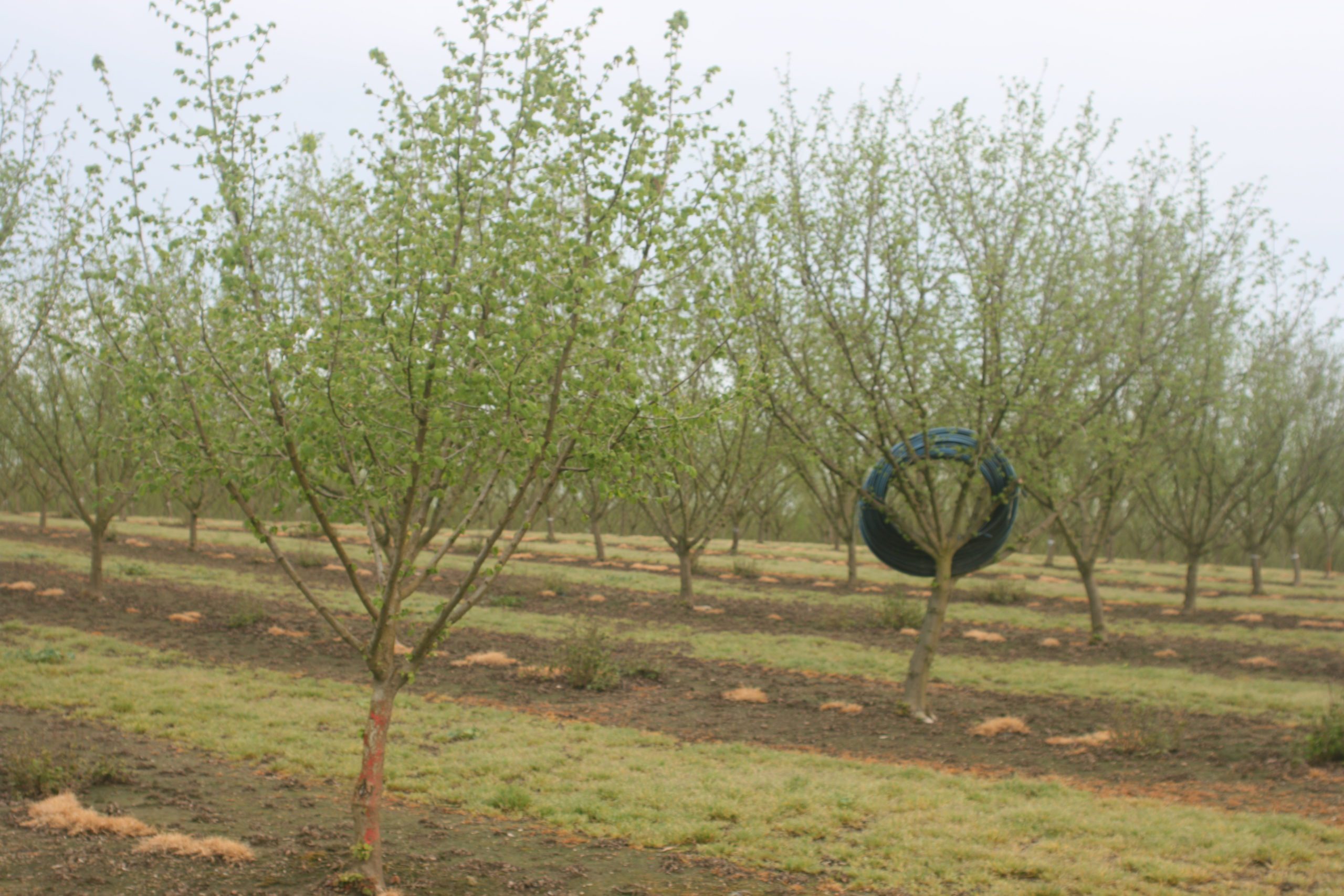
He sees particular opportunity in young orchards, where cover crops can be established without the added pressure of harvest residue.
“It helps the soil. It enhances infiltration. It helps with tree health. It provides pollinator habitat. There are so many benefits,” he said.
Collins said tools like this can help growers move past hesitation by offering a quick, accessible overview of different cover crop species and their key attributes, which is especially useful for those just getting started.
Linking Cover Crops and Water Management
Alongside the new tool, Light and collaborators from Sustainable Conservation, UC ANR and USDA released a white paper exploring the relationship between cover crops, soil health and water use under the Sustainable Groundwater Management Act. The document aims to address ongoing tension between regulatory limits on groundwater pumping and growers’ use of rainfed cover crops. The accompanying grower guide outlines practical management considerations for cool-season cover crops in Mediterranean climates, emphasizing how to maximize water benefits while limiting water use.
Light said the most important step is defining clear goals at the outset.
“Are you trying to improve infiltration, add nitrogen or provide pollinator habitat? Those goals determine everything that follows,” she said.
Termination timing and biomass management, she added, are key to avoiding moisture loss or equipment issues in the spring.
“The termination question is critical,” she said. “Sometimes you plant a cover crop without thinking about the end in mind, and that’s what makes you never want to do it again.”
While the first version of the Cover Crop Decision Support Tool is complete, planned updates such as a seeding rate calculator and economic modules are on hold pending federal funding. For now, Light said the team hopes feedback from users will help refine data accuracy over time.
“This is really a public tool for free use,” she said. “If growers share what they learn, that will only make it better.”
To learn more or try the tool, visit covercrop-selector.org.