

Listen to the audio version of this article. (Generated by A.I.)
While interest in self-compatible almond varieties, particularly the new Nonpareils, continues to grow, the industry concern has been with export buyers. With the EU being a large market for California almonds, enthusiasm could be dampened if they receive a GMO designation.
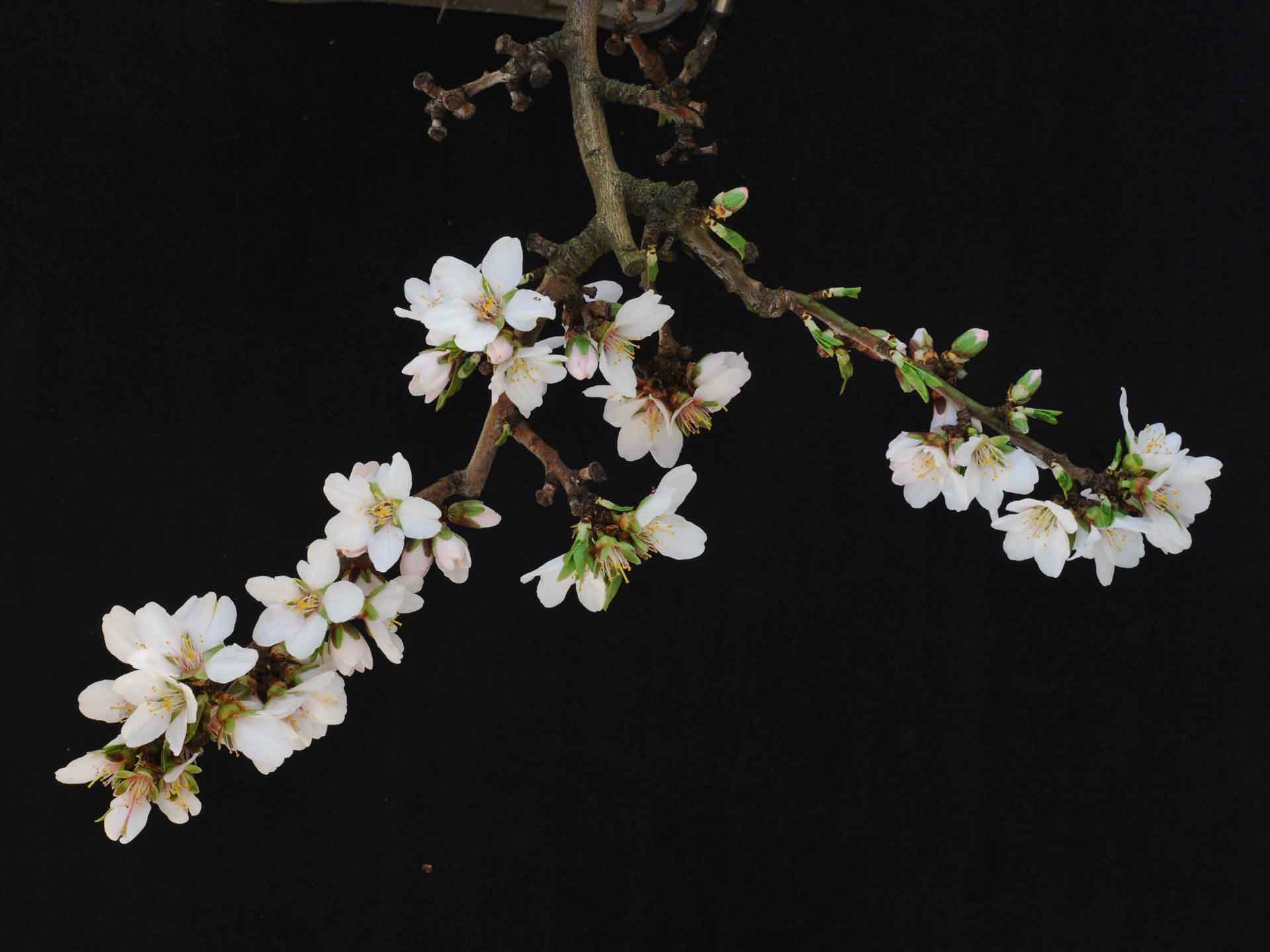
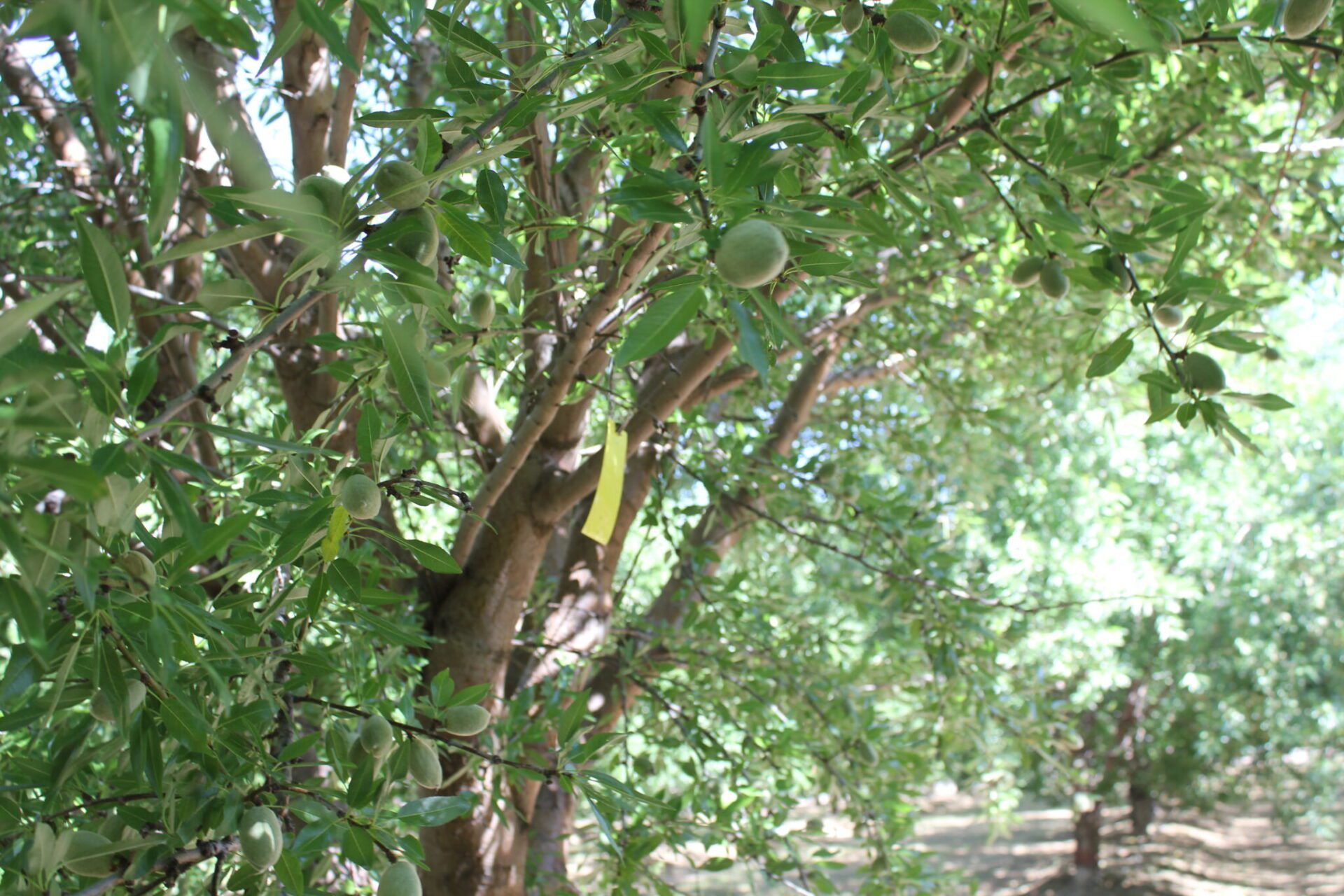
Almond Board’s senior scientific officer Josette Lewis said the technique used to produce Sierra Gold Nursery’s FruitionOne and Burchell’s Nonpareil Plus should not place them in the GMO category. A gene-editing technique was used in the development of these two self-fertile almond varieties. No foreign genetic material is involved. With this technique, genetic companies just remove, turn on or turn off a selected gene in a DNA strand. In the case of these self-fertile varieties, they are genetic copies of Nonpareil except for the edited genes.
At The Almond Conference, Lewis said the EU is on a path to declassifying gene-edited plants as GMOs.
“This is a path forward,” she said. “We have time as an industry to figure this out as the crops from these gene-edited trees will not be on the market for several years.”
Potential Almond Board roles include monitoring export market regulations, including gene-edited almond varieties into regional varietal trials, providing information to growers and examining options for segregation to keep kernels in the U.S. market. Lewis said ABC could also assist in regulatory approval in leading export markets.
Unlike conventional or GMO technologies, gene editing provides a rapid, non-GMO pipeline of agricultural products to expanding international markets with increasing consumer acceptance.
‘We sequenced the entire genome of Nonpareil and nothing changed except its ability to pollinate itself and others.’
— Tom Burchell, Burchell Nursery
Gene-Edited Almonds Enter Field Trials
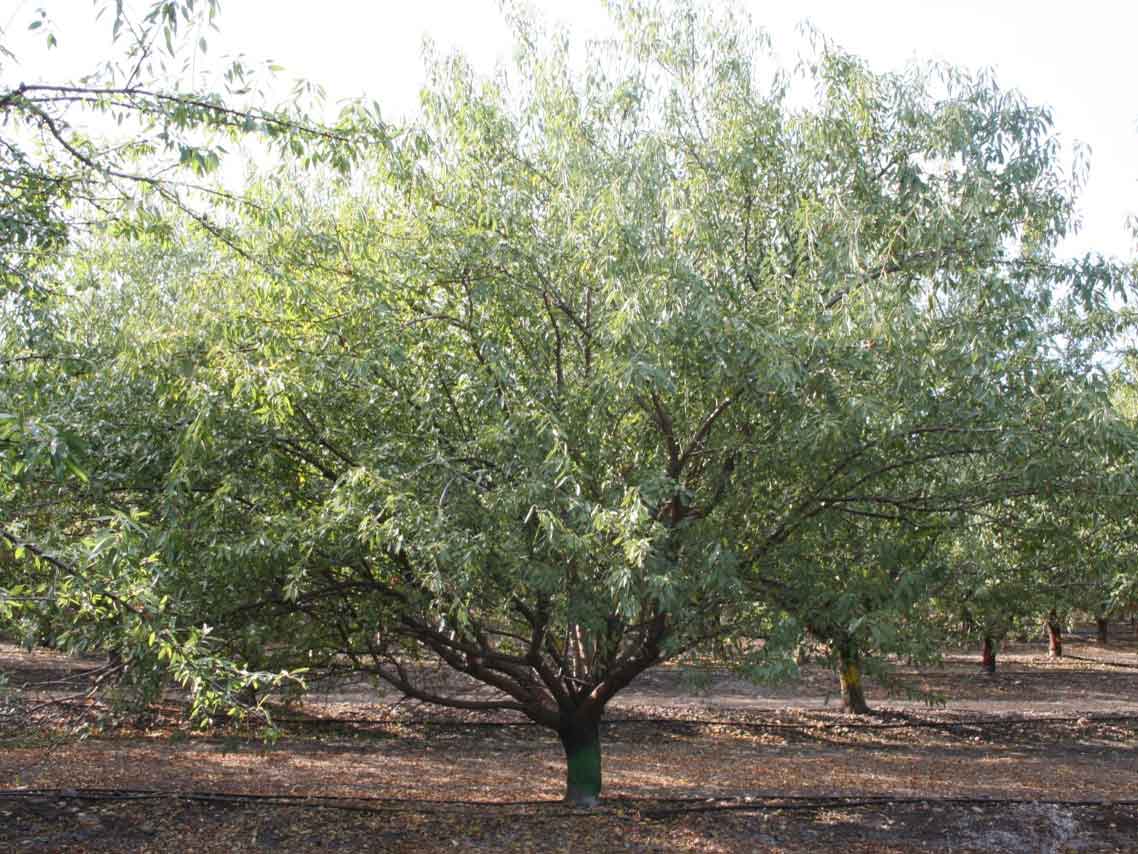
Reid Robinson, CEO of Sierra Gold Nursery, said the goal of the breeding program was to produce a tree that was identical to Nonpareil but was self-fertile. Their FruitionOne (trademark) is identical to Nonpareil except for one single feature. These trees produce self-fertile flowers.
On the industry side, Robinson predicted that Sierra Gold’s FruitionOne could be contributing $75 million to $150 million per year in incremental industry profit.
“This is one of the biggest structural almond cost reductions in 30 years,” he said.
Self-fertility resets the cost structure for growers with higher, more consistent yields through all bloom conditions. Hive rental costs are reduced, and there are lower labor and management costs.
Processors also benefit from tighter, higher quality kernel size distribution, lower reject rates and more predictability.
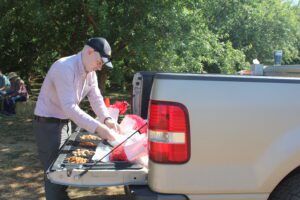
Robinson said the mechanism to produce FruitionOne trees is well understood and there is a very high level of quality control. Laboratory observations and experiments confirm that plants should be self-fertile. The nursery will be watching for evidence of flower setting in a pollinator exclusion zone this spring.
Robinson said Sierra Gold is setting up their own proving ground in almond growing regions of the state using whole-house exclusion, pollinator nets and trial blocks.
On the market side, Robinson said the biotechnology company Ohalo’s regulatory team is working through the process for FruitionOne. They noted that every major almond destination already imports GMO products. Gene-edited almonds are treated as food, not planting material, so there are no environmental rules. Simple gene edits are not classified as GMO in many key markets, including Japan, Australia, Brazil and Argentina. With strict markets like the EU and China, there are well-defined routine food-import pathways for GMO products.
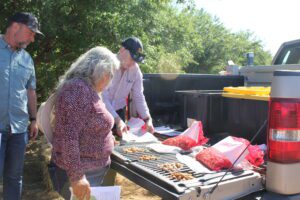
Tom Burchell of Burchell Nursery said that unlike conventional or GMO technologies, gene editing provides a rapid, non-GMO pipeline of agricultural products to expanding international markets with increasing consumer acceptance.
Precision gene editing, he said, can provide a path to deregulation and increase consumer acceptance while making use of the valuable parent DNA of the Nonpareil.
The gene-editing technique also allows specific traits to be incorporated into existing germplasm in a fraction of the time. Conventional breeding requires crossbreeding, takes 3 to 5 years per generation and there is a loss of varietal identity.
The biotechnology company Verinomics collaborated with Burchell to develop their self-fertile Nonpareil. He emphasized that Nonpareil and Burchell’s Nonpareil Plus nuts are the same.
“We sequenced the entire genome of Nonpareil and nothing changed except its ability to pollinate itself and others,” Burchell said.
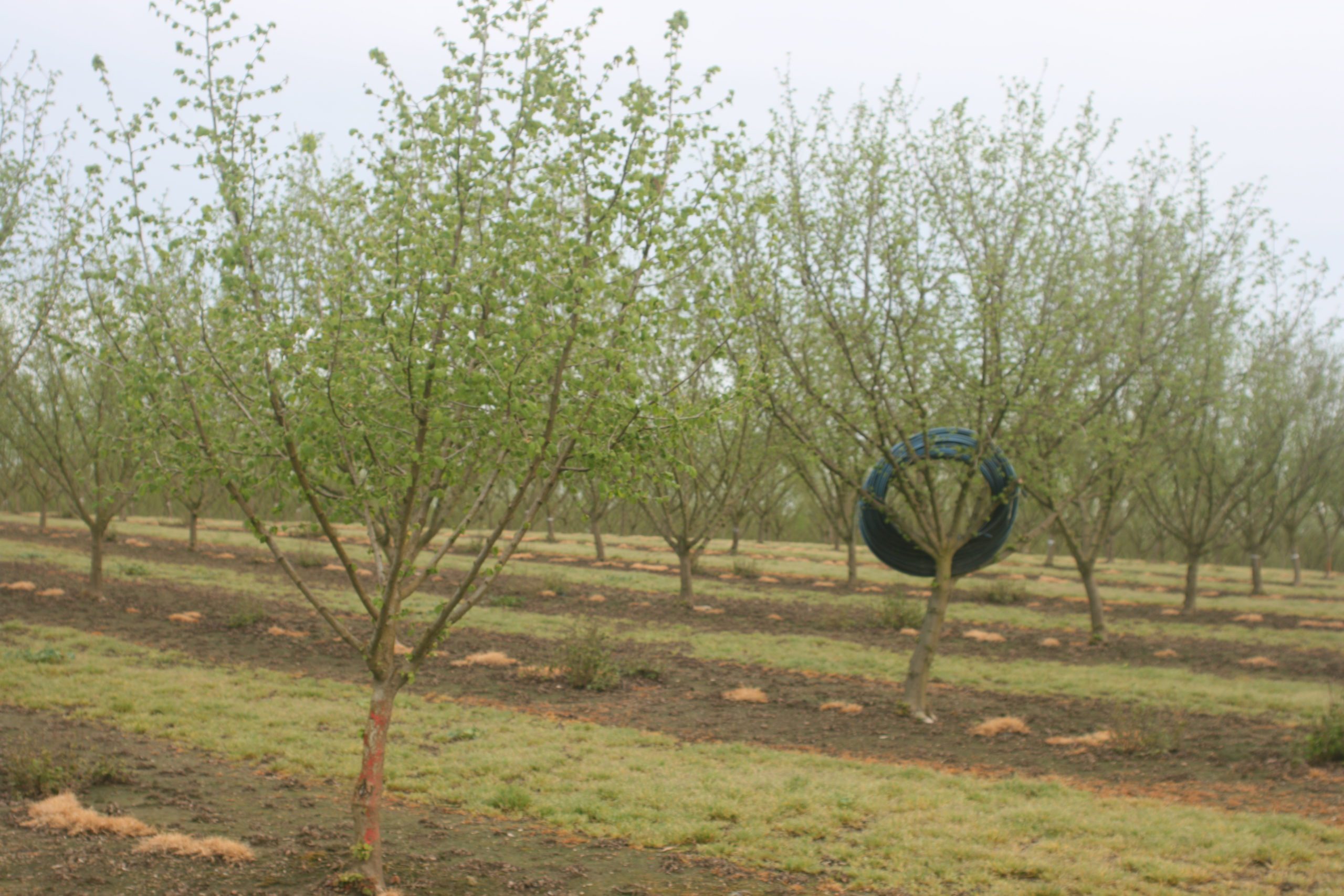
Burchell’s Nonpareil Plus, a trademarked variety, is being propagated in their greenhouse. A test orchard is planted at their Fowler property. Burchell said hundreds of test trees will go out this spring into grower field trials and orders are being written for commercialization in 2027.
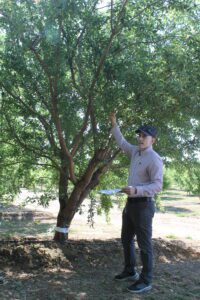
UC Trials Highlight Promising Yields and Traits
Success of any new variety is realized when a grower chooses to replant it.
Almond variety trials are in the third generation. UCCE advisor Luke Milliron said the trials are important, finding issues before they are planted by growers.
Milliron said variety trials are best at revealing the worst. Varieties that are dropped from trial tend to have a later harvest date or below-average yield. They also fail due to poor nut removal, lack of breeder interest, hull rot susceptibility and poor nut quality including doubles, creases and stain.
Parameters measured annually at each trial location include bloom time, duration and density; hull split timing; yield; kernel quality; ease of harvest; bloom, foliar and fruit disease incidence; canopy size; and compatibility with Krymsk86 rootstock in Butte County.
One UC Davis self-fertile, UCD 18-20, in the Butte cumulative yield trial showed an average of 2,700 over 10 harvests, topping Aldrich, Booth and Parpareil. Four years of nut quality data across Butte, Stanislaus and Madera counties showed UCD 18-29 lowest in percent of navel orangeworm damage, but highest in percent of doubles.
The USDA’s Parpareil is another self-fertile in the trials that is consistently one of the highest-producing varieties in the UC trials. It also has an early harvest date and low NOW damage and hull rot susceptibility.
Roger Duncan, UCCE Stanislaus County emeritus, noted other pluses in self-fertile varieties. He said they are likely to have the most even yields from year to year and need little pruning early and none after third leaf. Most of them bloom in the same time frame as Nonpareil.
Yields of new varieties in the fourth-generation regional variety trial are showing early high producers. Planted in the fall of 2022 and spring 2023, the third-leaf trees are in Butte, Stanislaus and Kern counties. High producers at the 2025 harvest were Yorizane and Parpareil.

Cecilia Parsons | Associate Editor
Cecilia Parsons has lived in the Central Valley community of Ducor since 1976, covering agriculture for numerous agricultural publications over the years. She has found and nurtured many wonderful and helpful contacts in the ag community, including the UCCE advisors, allowing for news coverage that focuses on the basics of food production.
She is always on the search for new ag topics that can help growers and processors in the San Joaquin Valley improve their bottom line.
In her free time, Cecilia rides her horse, Holly in ranch versatility shows and raises registered Shetland sheep which she exhibits at county and state fairs during the summer.