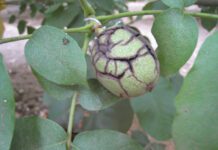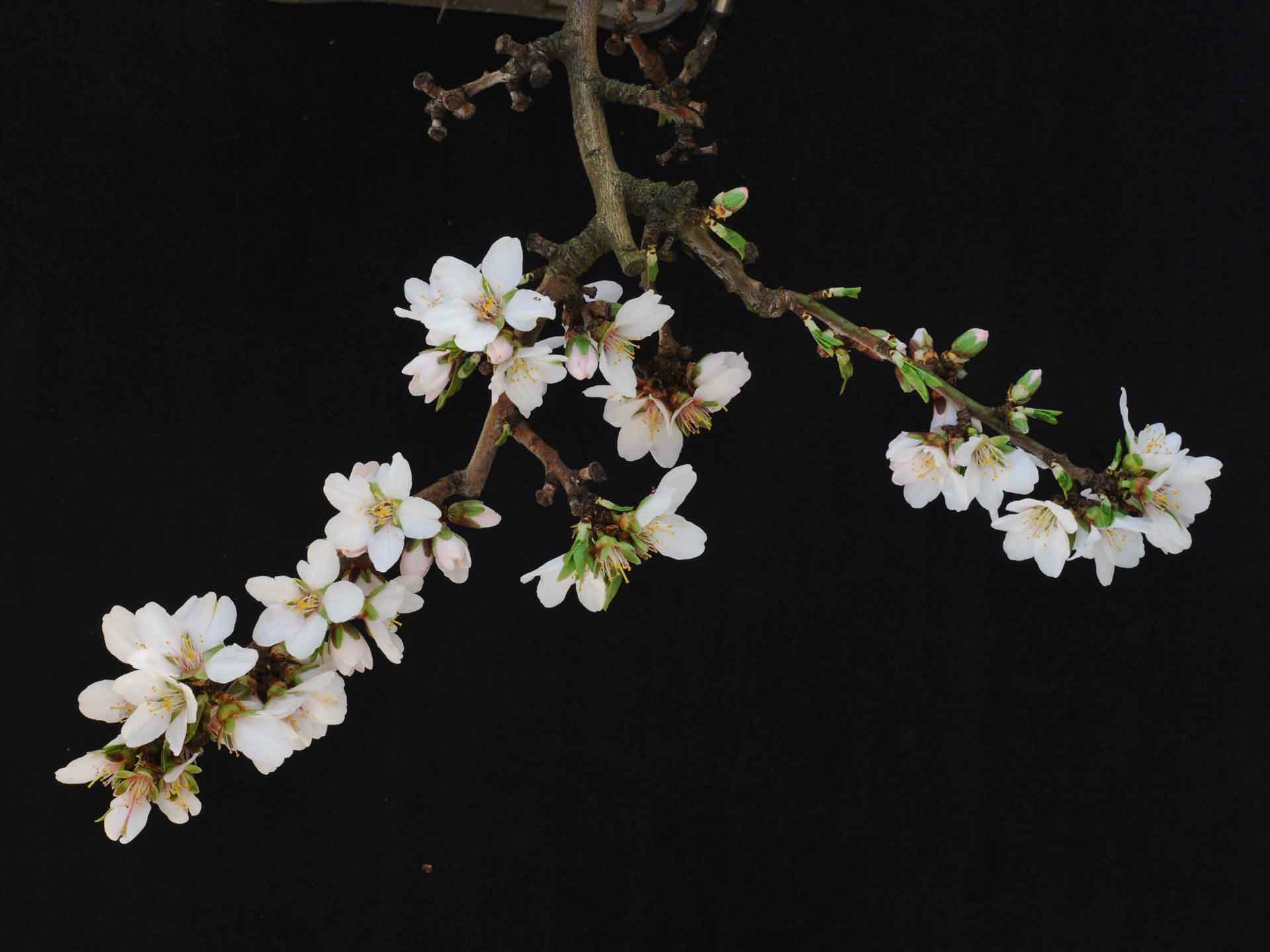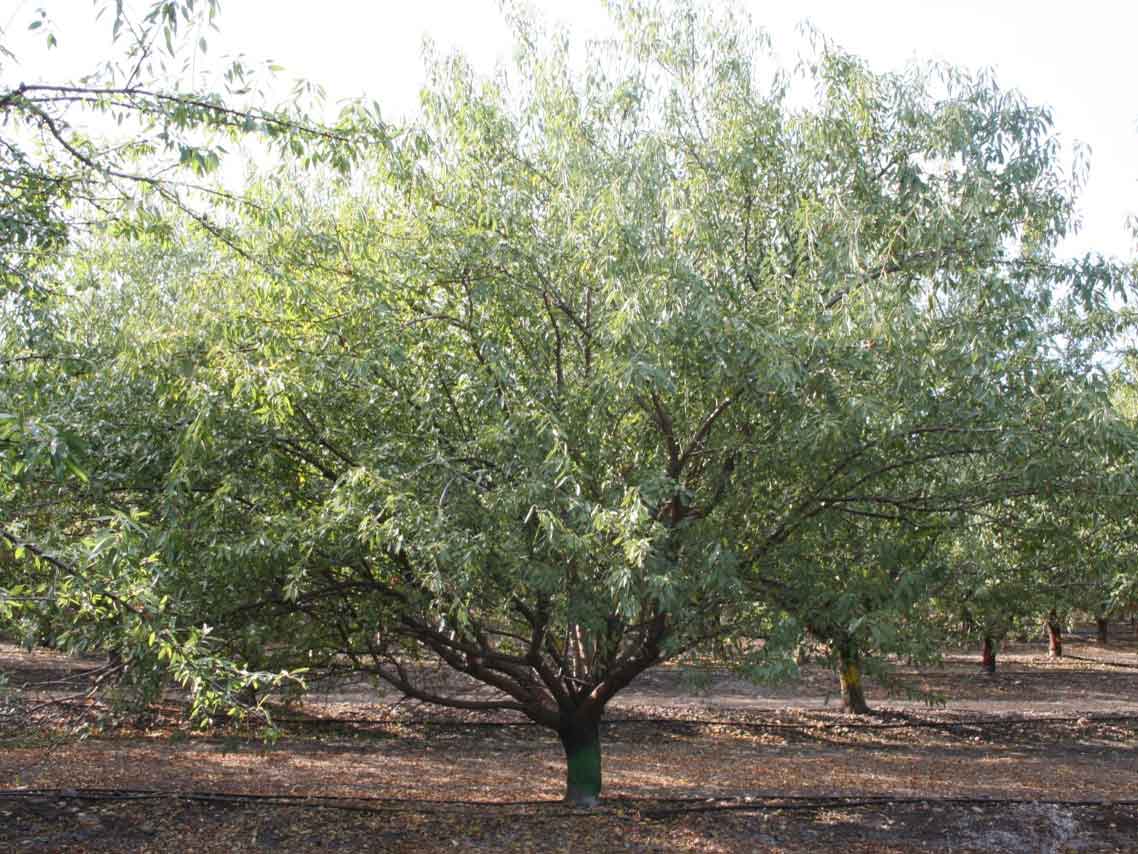



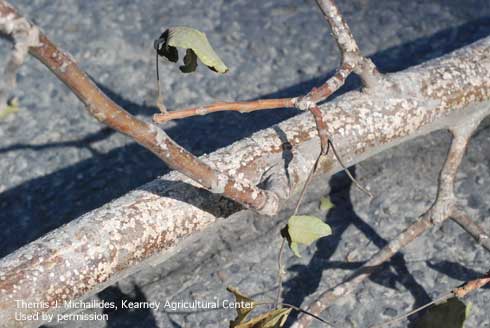
Walnut scale is a very tiny insect pest that can damage walnut trees in two ways. UCCE farm advisor Elizabeth Fichtner, in a Growing the Valley podcast with UCCE advisors Luke Milliron and Phoebe Gordon, explains that Quadraspidiotus juglansregiae is an armored scale that feeds on sap in tree twigs and branches. The wounds caused by the feeding open the tree up for canker and Botryosphaeria infection.
“Armored” means the insects live under a protective waxy coating. Under the coating, scales suck plant juices from the inner bark by inserting their mouthparts into twigs and branches. UC IPM Guidelines report that scale infestations can make trees look water-stressed. The fruiting wood on lateral-bearing walnut cultivars may die back from high populations of scale feeding. Scale feeding may also cause the bark to crack.
Bob Van Steenwyk, UCCE specialist emeritus and research entomologist at UC Berkeley, noted in the publication San Joaquin Valley Trees and Vines that walnut scale predisposes trees to infection by Botryosphaeriaceae fungi. An association between scale and fungal infection can be seen when the scale body is lifted from the shoot to reveal a developing canker. Van Steenwyk said the feeding of the scale created an opening for the pathogen to infect and colonize the branch. Infestation of twigs by walnut scale also predisposes new growth to infection and disease development. Research studies with three different pathogens in the Botryosphaeriaceae family suggest that disease levels are 60% to 70% higher on branches colonized by scale than on uncolonized branches.
Walnut scale produces two generations per year. The first generation, Fichtner said, is much larger than the second. Both male and female scale overwinter as nymphs. In spring, both sexes resume development and mature at the same time. Males emerge as winged insects and mate with the females, who remain under the scale covering. After mating, females lay eggs in May that hatch in two to three days. Female crawlers move around the branches for a short time before they settle down, begin feeding, and secrete the scale cover.
To distinguish walnut scale from other armored scales in walnuts, lift the waxy covering and look for a yellowish body that has indented margins. Male crawlers move to the margins of a female cover and settle. Initially, the scale cover is white, but it changes to gray or brown after about a week. The first generation completes development by mid-July, and females lay eggs in mid-August. These eggs hatch, and the second-generation crawlers settle and molt once before winter.
Fichtner said that natural enemies of walnut scale can be found in most orchards, but they do not control scale.
Treatment
Treatment for walnut scale has historically been done at the crawler stage, when the insects are not protected by the waxy coating and are moving. The UC IPM guidelines report that oils will suppress low to moderate scale numbers, but they can affect the walnut aphid parasite. Oils can also harm stressed trees.
Insect growth regulators are a new tool being used successfully to control scale insects. These materials also target the crawler stage and are applied at delayed dormancy. Application is best made before bud break for better coverage. Fichtner said there is an ongoing study to determine the optimal application window.
IGRs inhibit maturation of the insect and are applied early in the growing season before leaf-out so better coverage can be achieved. Insect growth regulators prevent reproduction, Fichtner said, which limits the potential for resistance development. The products Esteem and Centaur are labeled for use in walnuts. Their mode of action group numbers from the Insecticide Resistance Action Committee are 16 and 17.
The challenge with insect growth regulators, Fichtner said, is that results are not visible immediately; growers must wait for metamorphosis to occur. Monitoring afterward with trap counts is extra work, she noted, but the trap counts can yield good data. By shutting down the crawler stage, the adult scale population is reduced. Monitoring may also suggest there is no need to make applications every year.
Fichtner said there is a new project underway aimed at understanding the biology of scale and how insect growth regulators affect male emergence.
The podcast can be found at growingthevalleypodcase.com.

Cecilia Parsons
Cecilia Parsons has lived in the Central Valley community of Ducor since 1976, covering agriculture for numerous agricultural publications over the years. She has found and nurtured many wonderful and helpful contacts in the ag community, including the UCCE advisors, allowing for news coverage that focuses on the basics of food production.
She is always on the search for new ag topics that can help growers and processors in the San Joaquin Valley improve their bottom line.
In her free time, Cecilia rides her horse, Holly in ranch versatility shows and raises registered Shetland sheep which she exhibits at county and state fairs during the summer.