


Listen to the audio version of this article. (Generated by A.I.)
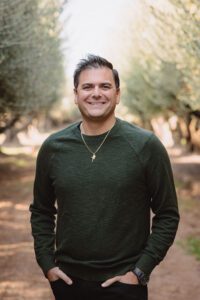
Vincent Ricchiuti, chief operating officer of P-R Farms, is part of a family that has been in the almond business for more than 50 years. Ricchiuti’s great-grandfather began the family’s farming legacy when he immigrated from Italy, then moved from Rochester, New York, to the Fresno area. After serving in World War II, he came home and started farming.
The family began with stone fruit but switched to almonds in the 1960s. Now, P-R Farms is a vertically integrated company that grows, sells and markets its own organic and conventional almonds. In addition, P-R Farms has added a direct-to-consumer sales business for both its almond and olive products.
We asked Ricchiuti to share his thoughts about his family’s business and the future of the almond industry:
Talk about how the family business went from simply growing to being vertically integrated.
We started growing, and we belonged to a co-op, and we sent our almonds off to be processed. My grandfather liked to control his own destiny and did not want to wait in line at a processor, so that’s what he built.
The almond facility is our first huller sheller, and the rest is history. We’ve kind of just grown organically since then, but we’ve been doing it for a long time under the P-R Farms label.
“Almonds are efficient to farm and can be used as an ingredient in a lot of different things. At the end of the day, it’s one of the best-tasting nuts out there.”
— Vincent Ricchiuti, chief operating officer, P-R Farms
How did you get into the family business?
I got started in the family business really young. I started working in our produce packinghouse in the summer, starting in third grade and just doing odd jobs during the summers.
My true almond story didn’t really get started then, though, because of the timing of harvest. We were in school when our almond harvest was going on, so that was never really part of my younger days as much as the stone fruit was.
But when I graduated college, my dad put me in the almond harvest. I had to work the night shift at our almond huller for two years. That’s where I got to learn the ins and outs of that facility and how it operated. That would have been our 2006 and 2007 crop years.
I was working out at our almond facility at night during harvest and the rest of the year at my normal job in the company.
What does it mean to you to work in the family business?
Our family business is unique. We’re vertically integrated, and I’ve worked alongside my dad my entire career. My mom runs the retail store. Being able to work with both of them every day is special. I was also able to work with my grandfather when he was still around. Having multiple generations involved is what makes California farming special.
Talk a little bit about the direct-to-consumer side of things.
We have another brand, Enzo’s Table, and it’s a direct-to-consumer brand. We also have Enzo Olive Oil Company. We sell directly to consumers with both olive oil and almond products. We have almond butter, candied almonds and biscotti.
We always had a small farm store, but things really took off when we launched the olive oil brand around 2011 or 2012. We rebranded to Enzo’s Table, named after my great-grandfather Vincenzo. The idea is that we’re selling things you’d find on his table. We mailed our first catalog around 2012 or 2013 and have grown steadily since then.
We always had a small store, but the olive oil brand really expanded things. Since then, we’ve added products that reflect what we grow. Our almond butter has three flavors: traditional, chocolate and autumn spice. The chocolate uses Guittard chocolate and our olive oil. The autumn spice is a seasonal product developed with Burlap & Barrel.
Now, we have an online store, a catalog business and retail stores. Customers are buying directly from the farmer, so they know they’re getting something fresh and local.
That’s been a big focus, growing that brand and staying vertically integrated all the way to the consumer. We’re using Nonpareil almonds in our almond butter, which is uncommon because of cost, but it’s delicious and has won awards.
We’re also a big gifting company, especially in Q4. People receive our products as gifts and then become repeat customers. We handle our own packing and fulfillment, and it’s been a major area of growth.
What are the big changes you’ve seen in the almond industry?
Technology. With the new sorters that have come out to make everything more efficient and less labor-heavy, it is a huge benefit for the industry and for the processor and the grower because at the end of the day, you’re able to save more money.
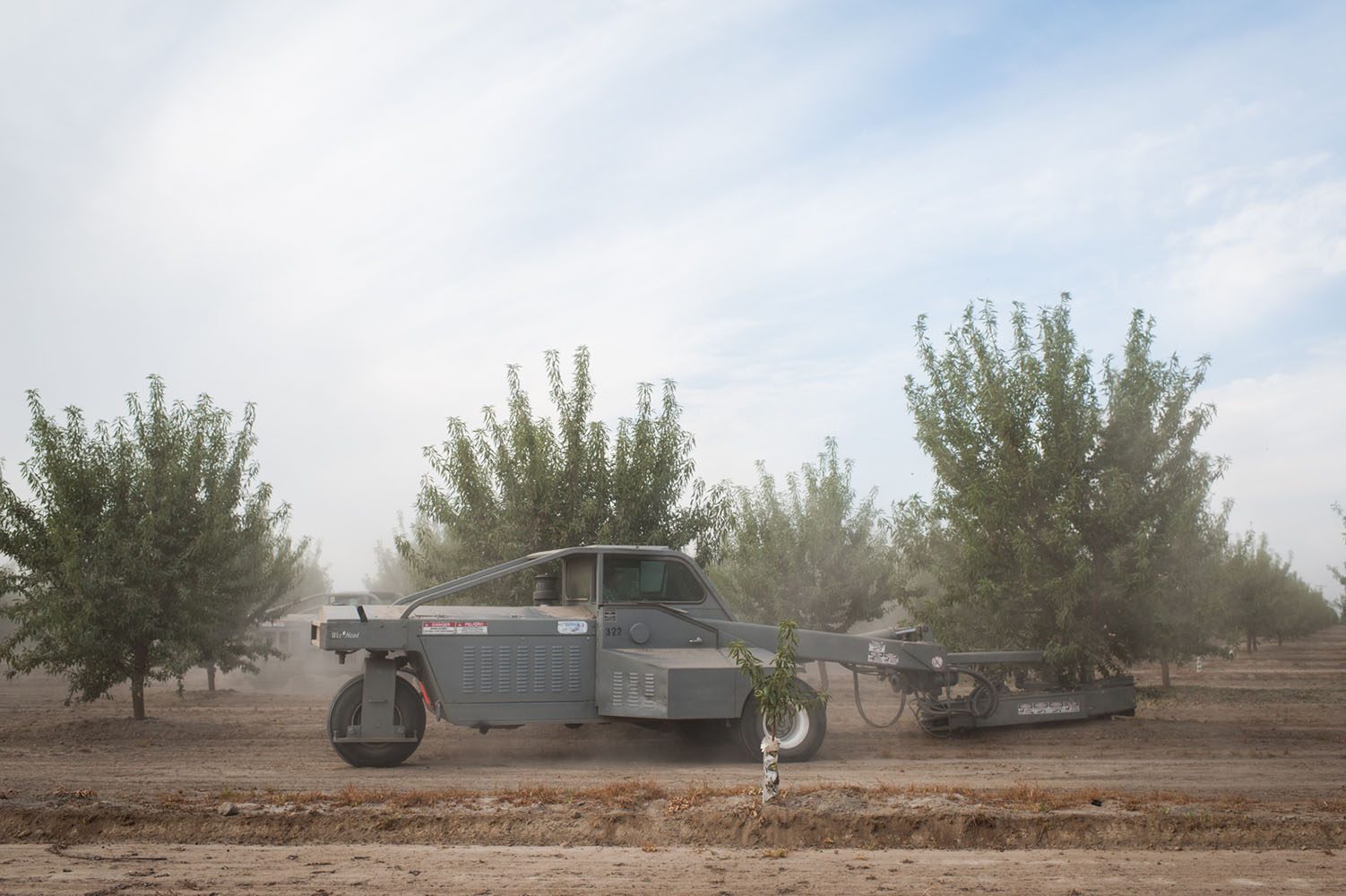
Also, out in the field, whether it’s different types of shakers and harvesters, the speed at which those are able to work and pick up the almonds and harvest those fields makes things way more efficient. Every few years, there’s always big swings in technology and advancements, and it’s really cool to watch.
I remember when my parents would tell me stories about when they would have to go out in the field and hit the almond trees with rubber mallets. We’ve come a long way from those days to where we are now.
In the future, it’s going to be about figuring out how to continue to build on efficiency and really get things to where you’re touching that almond even fewer times, so you can maybe get it through one pass on the sorting line and not have to touch it again. The more times you touch it, the more your price goes up.
What types of technology do you see coming in the future?
Automation. We’re seeing it with GPS, and we’re seeing it with other things now. The more automation, the better.
Even on the irrigation sets, having automated irrigation and using technology to make sure you’re getting the right amount of water on your field is important.
I’ve helped champion really focusing on water efficiency out on the farming side. We try to use different platforms, whether it’s our WiseConn system or working with AgMonitor, to make sure we’re getting the right energy costs and energy efficiency, not just water efficiency, but how those two things work together.
In the future, as energy costs continue to go up, how do we get the most from our water during those high peak times of needing to irrigate? We want to irrigate at the right time and use the right amount of water so we’re not wasting it through the root zone.
That whole thing out in the field is another huge component that we’re really just starting to scratch the surface on with data, and we’re going to continue to learn more over time.
Talk a little bit about the water situation in California.
That’s the million-dollar question. It really is different from ranch to ranch: what the water situation is at each location, whether it’s in a wide area, how much water it has, what the efficiencies of your pumps are and how far the water is down in the ground.
We’re continually having to look at that and try to project into the future. When we decide to take a field out because of age, are we putting something back in, or are we keeping that fallow to use that water allocation so the other half of the ranch has a better allocation?
It’s all about trying to consume as much data as you can. There’s still so much to learn. I don’t think anybody has the silver bullet yet. Everybody’s going through this for the first time and trying to find their own path.
What are three things about growing nuts that keep you awake at night?
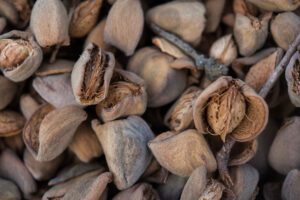
It depends on the time of year. During almond harvest, it’s: Do we have enough trailers? How does it look? Is the almond huller going to be able to keep up? Are we going to have a breakdown at 2 in the morning? Is something going to break in the huller?
Machinery breakdowns are high on the list because that sets up what you’re going to be able to do that day or the next couple of days. So, at the top of my list are mechanical breakdowns during harvest.
Then trying to understand the almond market. The last few years have been rough. I think we’re seeing the light at the end of the tunnel, which has been great. Hopefully, we can sustain that.
And the third would be water. What does the state look like? What are the rules and regulations? They change often, and we’re still trying to figure out what rules we’re living under today and what’s coming next.
What makes you hopeful about farming almonds into the future?
I think we’re on the right side of health attributes. What we’re selling is good for you. It’s delicious, shelf-stable and can be shipped globally. It’s high in protein, all the things you want in a healthy lifestyle.
Almonds are efficient to farm and can be used as an ingredient in a lot of different things. At the end of the day, it’s one of the best-tasting nuts out there.
What do you think needs to happen to put the industry on the best path for the future?
We need to keep growing consumption domestically, for one. I think domestically we still have a lot of room to grow.
And then internationally, it’s trying to win back some markets that have fallen off in recent years. There are a lot of people in this world, so we need to continue to push those international markets and find new and innovative ways to use the almond and introduce it to more people, even hand them out and explain how healthy the almond is for you versus other nuts.
What would you say are the biggest assets of the nut industry in California?
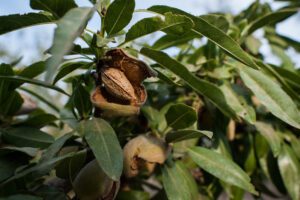
I think it depends on how you want to look at it. For all the things I’ve said already, I think it’s an efficient commodity to grow. It is favorable for the labor market and for growth. You can get great yield from the trees.
It can be very profitable when farmed correctly and with good market conditions. The Almond Board has done a great job with sustainability and showing farmers how to do different things in the orchard to make the growing process more sustainable.
From a freshness standpoint, a California almond, getting it from tree to shelf, can be a very good thing versus bringing it from around the globe, where it’s sitting in containers for months.
What advice would you give a young person who wanted to get into farming?
Be open-minded. There’s always new technology, but you need to understand what has been done in the past, so you understand the problem you’re trying to fix.
Sometimes people rely too much on technology and not enough on what’s actually happening in the field. Just because the iPad says something doesn’t mean it’s actually happening out there.
Get out in the field, understand what’s going on, talk to your crews. You’ll learn more from them in five minutes than from analyzing data for weeks. It’s about the balance between technology and boots on the ground.
Also, find a good mentor. There are great people in this industry. Learn from them and their experiences.